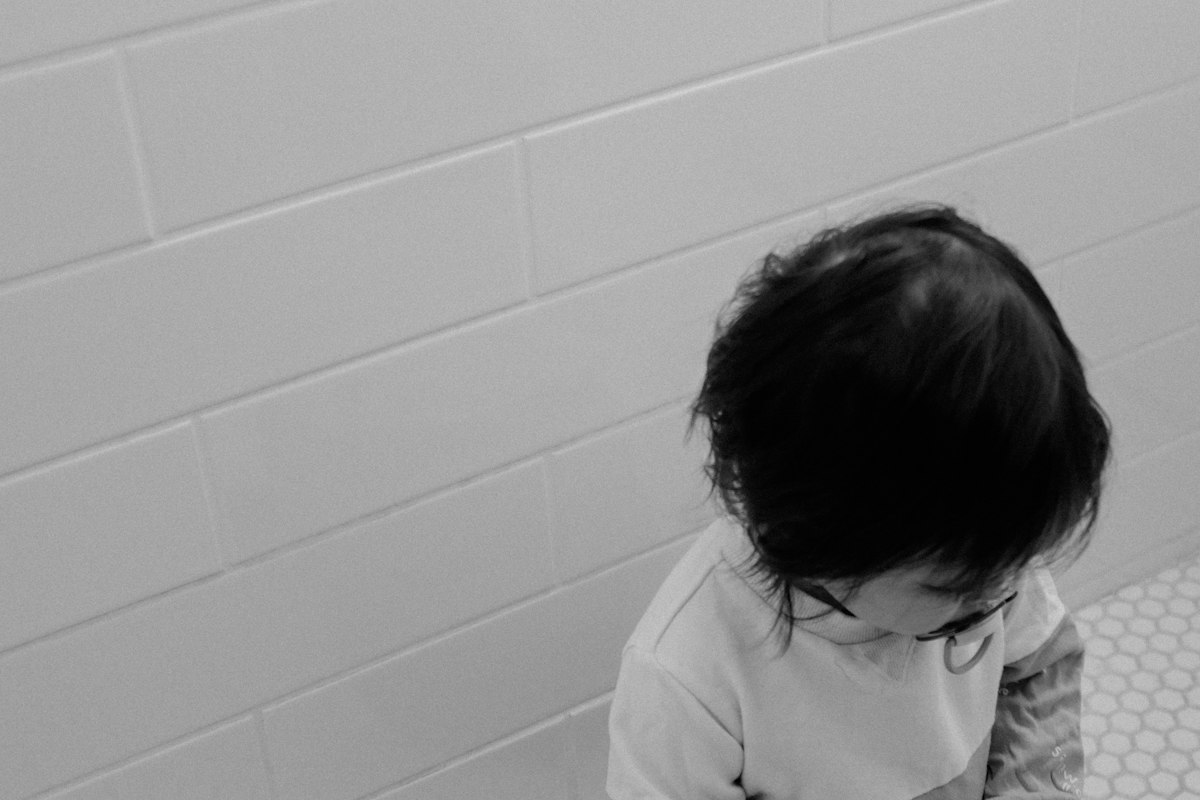


Crying at separation is an expected response. A graduated adjustment programme, what to do at the goodbye, choosing an institution and when assessment is needed.
Everyone knows how the day goes for a parent who leaves a crying child at the nursery door and goes to work. Guilt, hesitation and the question "am I doing the wrong thing?" are the most exhausting part of the adjustment period.
Crying is an expected response in this period. For a child, nursery means separating from a caregiver for a long period for the first time, and their response to that separation is a sign of developmentally healthy attachment.
This article sets out how the adjustment process proceeds, which responses are expected, what families and institutions should do, and when assessment is needed.
Key Points
- Crying at separation is an expected response; it indicates healthy attachment.
- What matters is not the crying but how long it takes the child to settle after the parent leaves.
- Slipping away damages trust; the goodbye should be short but must always happen.
- The adjustment period varies from child to child; two to four weeks is a common range.
- A parent's own anxiety transfers directly to the child.
- Symptoms persisting beyond four to six weeks and deepening require assessment.
When Should a Child Start Nursery?
There is no single right age. The decision is made by weighing the family's needs and the child's developmental situation together.
Around the age of three, peer relationships become a developmental need for most children; from this age nursery provides not only care but a developmental contribution.
Nursery at younger ages is of course possible, but what matters at these ages is the size of the group, the continuity of the caregiver and the amount of attention available per child. In the younger age group, the caregiver at the institution not changing frequently is a decisive factor.
When Not to Start
Starting in these periods makes adjustment harder:
- Just before or after the birth of a sibling
- During a house move
- While there is bereavement, separation or intense tension in the family
- In the middle of toilet training
- Immediately after a long period of illness
Where possible, leaving a few weeks between these changes makes it easier for the child to adjust to each one separately.
Preparation Before Starting
Preparing the Child
Talk about it in advance, but not too early. Young children have a limited sense of time; beginning to talk about it a week beforehand is enough at most ages. Talking about it months in advance prolongs anxiety unnecessarily.
See the nursery beforehand. Where possible, visit together before starting. Seeing the garden, the classroom and the teacher reduces the unknown.
Make the day concrete. "I'll drop you off in the morning, you'll play, have lunch, have a nap, and then I'll come." Knowing the sequence replaces uncertainty about time in a young child.
Play separation games. Hide-and-seek and similar games reinforce through play the idea that the person who goes will come back.
Practise with short separations. Short separations with someone you trust before starting make adjustment easier.
Preparing the Family
A parent's own anxiety is one of the most decisive variables in the adjustment process. A parent who hesitates at the door, comes back repeatedly, or cries conveys to the child that "this place is not safe".
This does not mean a parent should feel no sadness; it means the sadness needs to be managed in front of the child.
A Graduated Adjustment Programme
The approach applied in most institutions, and the one that works, is a graduated transition.
First stage: Short visits with the parent. The child gets to know the setting with the parent present.
Second stage: The parent in the building but outside the classroom. The child stays alone for a short period.
Third stage: Brief complete separation. Periods of one or two hours.
Fourth stage: Gradually extending the time, up to lunch.
Fifth stage: Nap time and the full day.
There is no fixed duration for each of these stages; the transition is adjusted to the child's response. Where there is difficulty at one stage, staying at the previous one gives better results than moving forward.
The Moment of Separation: What to Do
The most critical moment of the adjustment process is the goodbye at the door.
Say goodbye briefly and clearly. A long goodbye does not make separation easier; it prolongs it. Decide on a particular phrase and a particular gesture and do the same thing every day: one hug, one kiss, "see you later, I'll come this afternoon."
Never slip away. Leaving quietly while the child is distracted is easy at the time but produces a worse result the next day. The child of a parent who slips away will not take their eyes off them again, and separation anxiety deepens.
Do not come back. Hearing crying after you have left and returning conveys that crying works.
Let the same person do the drop-off. Where possible, the same person should do the drop-off throughout the adjustment period; predictability reduces anxiety.
Give a transitional object. A small toy from home, one of the parent's belongings or a family photograph allows the child to maintain the connection.
Keep to the pick-up time. Coming at the time you said is the foundation of trust. Being late increases uncertainty and anxiety in the child.
Expected Responses
The following are ordinary in the adjustment period:
- Crying at separation, clinging and not letting go
- Abdominal pain in the mornings, saying "I'm ill"
- Restlessness at home, irritability, increased anger outbursts
- Regression: bedwetting, thumb sucking, baby talk
- Difficulty falling asleep, waking at night
- A temporary decrease in appetite
- Clinginess to a parent, not letting go in the evenings
- Indifference about what happened at nursery, saying "we didn't do anything"
These responses generally intensify in the first two or three weeks and then decrease.
They do not all have to appear at once; one tends to predominate depending on the child. A child who becomes restless at home while appearing untroubled at nursery is also in the adjustment process; they express their difficulty in the setting they trust, and this is not a negative sign.
Responses may also appear not on the first day but in the third or fourth week. Once the novelty of the beginning has passed, a delayed response emerges in a child who grasps that the situation is permanent; this too is an expected course.
The Decisive Criterion
What matters is not the crying itself but what follows. The question to ask the teacher is this: "How long did it take them to settle after I left?"
Where a child settles within a few minutes and joins in play, the process is proceeding as expected. A child who cries all day, does not join in play at all, does not eat and does not sleep presents a different picture.
If Adjustment Is Difficult
Where the process is taking longer than expected, several points are examined.
Is the institution suitable? Group size, frequent changes of caregiver, the attention available per child, and the teacher's attitude to adjustment are decisive.
Does the structure at home support it? Disrupted sleep, morning rush and going to bed late directly make adjustment harder. Moving sleep times closer to the nursery's schedule one or two weeks before starting helps.
Can the parent's anxiety be managed? Where parental anxiety is high, separate work on that anxiety complements the process.
Is there another change? The birth of a sibling, a house move or tension in the family coinciding with the same period makes adjustment markedly harder.
What is the child's temperament? Children with a temperament that warms slowly to novelty need more time. This is not a problem but a difference, and the plan is extended accordingly.
What to Look for When Choosing an Institution
How easy the adjustment process is depends largely on the structure of the institution. Physical facilities are the first thing that catches most families' attention; yet other criteria are decisive.
Continuity of the caregiver. Particularly in the younger age group, the same person being present consistently is necessary for the child to form a bond. In institutions where staff change frequently, adjustment starts again each time.
Attention available per child. Group size and the ratio of teachers is the most important criterion at younger ages.
Is there an adjustment programme? Whether the institution applies a graduated adjustment, or expects a full day from the first day, should be asked. The approach of "just leave them on the first day, they'll cry and then get over it" is not a good sign.
The manner of communication. How information is shared during the day, whether families can call and ask, and whether the teacher can convey their observations, all matter.
The daily flow. Free play time, outdoor time, the nap routine and the age-appropriateness of activities should be assessed. A heavy academic content in the preschool years is not an advantage.
The approach to discipline. How the institution responds to unwanted behaviour should be asked about openly.
The Structure at Home in the First Weeks
Adjustment is supported not only at nursery but at home.
Establish the Sleep Routine in Advance
Moving sleep times closer to the nursery's schedule one or two weeks before starting markedly reduces the morning rush and the tension that comes with it. Separation is far harder for a tired child.
Whatever time the daytime nap happens at nursery, it should be moved closer to that time at home.
Do Not Rush in the Mornings
Morning rush directly complicates the moment of separation. Getting up fifteen minutes earlier removes most of the tension at the door.
Doing things such as choosing clothes and preparing the bag the evening before reduces that rush.
Increase Closeness in the Evenings
A child who has been apart during the day wants more contact and attention in the evening. Setting aside a short but uninterrupted time together in the evening during this period balances the separation during the day.
Twenty minutes with the phone set aside is more valuable than two scattered hours.
Do Not Ask Too Many Questions
Young children generally answer "what did you do today?" with "nothing"; this is not indifference but an inability to organise recall into words.
More useful questions are concrete ones: "Did you go out into the garden today?", "What was there for lunch?", "Who did you sit next to?"
Commonly Encountered Special Situations
Illnesses Becoming Frequent
An increase in infections in the first months after starting nursery is expected; the immune system is encountering new agents. But frequent illness directly complicates the adjustment process: separation becomes difficult again after each illness and the routine built up gradually is disrupted.
What can be done in this period is to make the return after recovery as quick as possible and with the same routine. Long gaps require adjustment to be established from the beginning again.
Not Speaking at Nursery
A child who speaks freely at home not speaking at all at nursery can be regarded as ordinary in the first weeks. Where it persists beyond a month and the child makes no sound at all to the teacher or peers, selective mutism should be considered and assessment carried out.
In this picture, forcing or rewarding the child to speak does not work; it increases anxiety.
Biting and Hitting Peers
In the two-to-three age group, biting and hitting are a form of expression resorted to because language skills are insufficient, and are ordinary at this age. Persisting and becoming frequent after the age of four requires assessment.
Establishing a shared approach with the institution matters: stopping the behaviour immediately and calmly, teaching the child an alternative way of expressing themselves, and avoiding long explanations.
A Sibling Staying at Home
Where the younger sibling of a child attending nursery stays at home, the child may form the thought "I'm being sent away and they're staying". Here it helps to frame nursery not as a punishment or exclusion but as a privilege belonging to them.
When Is Assessment Needed?
- Symptoms persisting beyond four to six weeks without diminishing
- The child crying all day, not joining in play at all
- Not eating at all at nursery, not going to the toilet, not speaking at all
- Marked regression at home that persists
- Sleep becoming persistently disrupted, nightmares
- Physical complaints continuing outside the mornings too
- Separation anxiety spreading to every separation beyond nursery
- The teacher reporting a concern about development
For detail on separation anxiety symptoms, see our article on separation anxiety disorder.
What Happens in the Assessment?
In Assoc. Prof. Mehtap Eroglu's approach, assessment begins with mapping the adjustment process in detail: when it started, whether a graduated transition was applied, how the moment of separation proceeds, and what happens after the parent leaves.
Developmental screening is then carried out. Difficulty adjusting to nursery can sometimes be a sign of a developmental difference noticed for the first time: language delay, difficulty in social communication or sensory sensitivity. A crowded and highly stimulating environment makes visible a difficulty that was not noticed at home.
Changes within the family, the parent's level of anxiety and the sleep routine are also part of the assessment.
Expert Opinion
According to Assoc. Prof. Mehtap Eroglu, the mistake families make most often is slipping out quietly while the child is distracted. This is easy at the time but leaves the child more anxious the next day; the child has now learned that their parent can disappear at any moment and will not take their eyes off them.
The second common mistake is taking the crying in the first days as the criterion. What should be looked at is how long it takes the child to settle after the parent leaves. That information should be obtained from the teacher.
Assoc. Prof. Mehtap Eroglu also emphasises that parental anxiety is one of the most decisive variables in the process. A parent who hesitates at the door and returns repeatedly conveys to the child that the setting is not safe. A parent being able to regulate their own anxiety is often more effective than any intervention directed at the child.
Assoc. Prof. Mehtap Eroglu notes that families give disproportionate weight to an institution's physical facilities during the adjustment process. In the younger age group what is decisive is not the size of the garden but the continuity of the caregiver and the amount of attention available per child.
The fourth point is that prolonged difficulty adjusting is sometimes a sign of something else. A crowded and highly stimulating environment can make visible a language delay, a difficulty in social communication or a sensory sensitivity that was not noticed at home.
Assessment and Appointment Process in Ankara
Referrals for nursery adjustment in Ankara increase markedly in September and October; institutions in Ankara starting at the same time as the school year explains this clustering. A substantial proportion of these referrals are resolved with a few weeks of a patient adjustment programme and involve no clinical condition.
The first aim of the assessment conducted by Assoc. Prof. Mehtap Eroglu in Ankara is to make that distinction: is this an expected adjustment response, or a clinical anxiety disorder or an unrecognised developmental difference?
A subject families in Ankara often raise is whether a child who cannot adjust should be withdrawn from nursery. Early withdrawal usually reinforces avoidance and makes the next attempt harder. But where the institution's structure is unsuitable, changing institution is a separate option, and these two situations should not be confused.
In some families presenting in Ankara, particularly in September, it becomes clear that the one struggling is not the child but the parent; the work is then directed at parental anxiety.
What families in Ankara find useful to bring: the teacher's observations during the day, information about the child's response after the parent leaves, and a one-week record of sleep and behaviour changes at home.
If you would like to arrange an assessment of your child's adjustment in Ankara, you can find information about the child psychiatry service and request an appointment.
In Summary
Crying at separation is an expected response and indicates healthy attachment. What matters is not the crying but how long it takes the child to settle after the parent leaves.
A graduated transition, a short and clear goodbye, the same person doing the drop-off and keeping to the pick-up time all make adjustment markedly easier. Slipping away is the most common and most damaging mistake.
Symptoms generally intensify in the first two or three weeks and then diminish. Symptoms persisting beyond four to six weeks, deepening and spreading beyond nursery require assessment.
For absence and refusal at school age, see our article on school refusal.
Frequently Asked Questions
Çocuğum kreşte her gün ağlıyor, normal mi?
Ayrılık sırasında ağlamak beklenen bir tepkidir ve sağlıklı bağlanmanın göstergesidir. Belirleyici olan ağlamanın kendisi değil, sonrasıdır. Öğretmenden şunu öğrenin: 'Ben gittikten sonra ne kadar sürede yatıştı?' Birkaç dakikada yatışıp oyuna katılıyorsa süreç beklendiği gibi ilerliyordur.
Çocuk oyalanmışken sessizce çıkmak daha mı iyi?
Hayır, en çok zarar veren hatadır. O an kolaydır ama ertesi gün daha kötü sonuç verir: çocuk ebeveyninin her an kaybolabileceğini öğrenir ve bir daha gözünü ondan ayırmaz. Veda kısa ve net olmalı ama mutlaka yapılmalıdır. Her gün aynı cümle ve aynı hareket işe yarar.
Uyum ne kadar sürer?
Çocuktan çocuğa değişir; iki-dört hafta yaygın bir aralıktır. Tepkiler genellikle ilk iki-üç haftada yoğunlaşır ve sonra azalır. Yeniliğe yavaş ısınan mizaçtaki çocuklar daha uzun süreye ihtiyaç duyar; bu bir sorun değil, bir farklılıktır.
Kreşe kaç yaşında başlamalı?
Tek bir doğru yaş yoktur; karar ailenin ihtiyaçları ve çocuğun gelişimsel durumu birlikte değerlendirilerek verilir. Üç yaş civarında akran ilişkisi gelişimsel bir ihtiyaç hâline gelir. Daha küçük yaşlarda belirleyici olan grubun kalabalığı, bakım verenin sürekliliği ve çocuk başına düşen ilgidir.
Kurum seçerken neye bakmalıyım?
Fiziksel imkânlar ilk dikkat çeken şeydir ama belirleyici değildir. Asıl ölçütler: bakım verenin sürekliliği, çocuk başına düşen ilgi, kademeli uyum programı uygulanıp uygulanmadığı, gün içi iletişim biçimi, serbest oyun ve açık hava süresi, ve kurumun istenmeyen davranışa nasıl tepki verdiği.
Evde huzursuz ama kreşte sorun yok, bu kötü mü?
Hayır. Çocuk zorlanmasını en güvendiği ortamda dışa vurur. Kreşte sorunsuz görünüp evde huzursuzlaşan çocuk da uyum sürecindedir ve bu olumsuz bir işaret değildir. Akşamları kısa ama bölünmemiş bir birlikte zaman ayırmak bu dönemde dengeleyici olur.
Ne zaman değerlendirme gerekir?
Belirtiler dört-altı haftayı aşıp azalmıyorsa; çocuk gün boyu ağlıyor, hiç oyuna katılmıyor, kreşte hiç yemek yemiyor ya da hiç konuşmuyorsa; evde belirgin gerileme sürüyorsa; uyku kalıcı biçimde bozulduysa ya da ayrılık kaygısı kreş dışındaki her ayrılığa yayıldıysa değerlendirme gerekir.
Uyum sağlayamıyorsa kreşten almalı mıyım?
Erken çekilme çoğu zaman kaçınmayı pekiştirir ve bir sonraki denemeyi zorlaştırır. Ancak kurumun yapısı uygun değilse, kurum değişikliği ayrı bir seçenektir. Bu iki durum karıştırılmamalıdır: uyum güçlüğü nedeniyle vazgeçmek ile uygun olmayan bir kurumdan ayrılmak farklı kararlardır.
Kreşte hiç konuşmuyor, ne yapmalıyım?
İlk haftalarda olağan karşılanabilir. Bir ayı aşarak sürüyor ve çocuk öğretmene ya da akranlarına hiç ses çıkarmıyorsa seçici konuşmazlık düşünülmeli ve değerlendirme yapılmalıdır. Bu tabloda çocuğu konuşmaya zorlamak ya da ödüllendirmek işe yaramaz; kaygıyı artırır.
Sık hastalanması uyumu etkiler mi?
Evet. İlk aylarda enfeksiyonların artması beklenen bir durumdur ancak her hastalıktan sonra ayrılık yeniden zorlaşır ve kademeli kurulan düzen bozulur. Yapılabilecek olan, iyileşme sonrası dönüşü mümkün olduğunca hızlı ve aynı rutinle yapmaktır; uzun aralar uyumu baştan kurmayı gerektirir.
References
- Bowlby, J. (1988). A Secure Base: Parent-Child Attachment and Healthy Human Development. Basic Books.
- Ahnert, L., Gunnar, M. R., Lamb, M. E., & Barthel, M. (2004). Transition to Child Care: Associations with Infant-Mother Attachment, Infant Negative Emotion, and Cortisol Elevations. Child Development, 75(3), 639-650.
- NICHD Early Child Care Research Network (2003). Does Amount of Time Spent in Child Care Predict Socioemotional Adjustment During the Transition to Kindergarten? Child Development, 74(4), 976-1005.
- Datler, W., Ereky-Stevens, K., Hover-Reisner, N., & Malmberg, L. E. (2012). Toddlers' Transition to Out-of-Home Day Care: Settling into a New Care Environment. Infant Behavior and Development, 35(3), 439-451.
- Vermeer, H. J., & van IJzendoorn, M. H. (2006). Children's Elevated Cortisol Levels at Daycare: A Review and Meta-Analysis. Early Childhood Research Quarterly, 21(3), 390-401.
- Thomas, A., & Chess, S. (1977). Temperament and Development. Brunner/Mazel.
- American Academy of Pediatrics (2019). Quality Early Education and Child Care from Birth to Kindergarten. Pediatrics, 144(2), e20191766.
- Kearney, C. A. (2008). School Absenteeism and School Refusal Behavior in Youth: A Contemporary Review. Clinical Psychology Review, 28(3), 451-471.
- Muris, P., & Ollendick, T. H. (2015). Children Who Are Anxious in Silence: A Review on Selective Mutism. Clinical Child and Family Psychology Review, 18(2), 151-169.
This article is for general information and does not replace an individual medical evaluation. If you are concerned about your child, please consult a child and adolescent psychiatrist. In an emergency call 112.

Doç. Dr. Mehtap Eroğlu
Associate Professor, Child and Adolescent Psychiatrist. Completed her specialty training in child and adolescent psychiatry at Ankara University. Over 15 years of clinical experience.
View Full ProfileRelated service: Parent counseling in Ankara