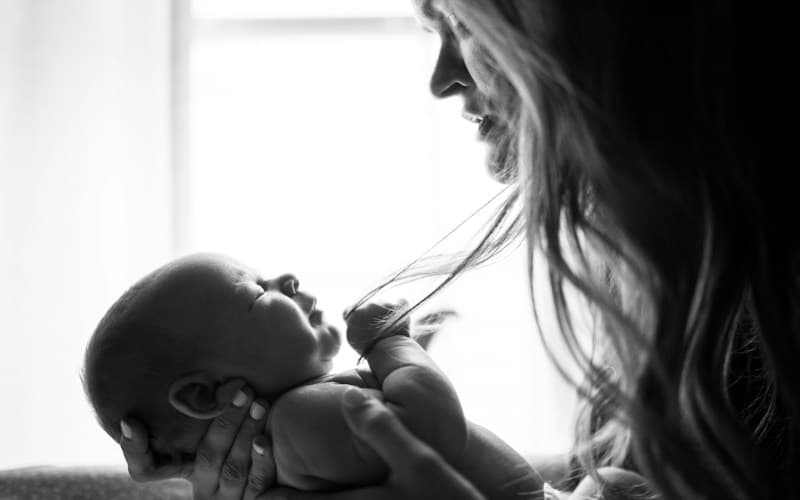

Infant Psychiatry

Infant Psychiatry
Evidence-based early intervention for attachment issues, sleep-feeding difficulties, excessive crying, developmental delays, and regulatory disorders in the 0-3 age period.
Infant psychiatry is a specialized field that evaluates and treats mental and developmental issues that emerge from birth to age 3. This period is critical, as it represents the most rapid phase of brain development and when environmental influences leave the most lasting impressions.
At our clinic, we provide evaluation and treatment in the following areas of infant psychiatry:
• Attachment Issues: Assessment of secure attachment between mother and infant, early detection and intervention for attachment disorders. Insecure attachment patterns can lead to behavioral and emotional problems in later years.
• Sleep Difficulties: Investigation of underlying causes for frequent waking, sleep refusal, and inability to establish sleep routines, along with family-specific sleep regulation programs.
• Feeding Problems: Comprehensive evaluation of feeding difficulties including sucking problems, food refusal, selective eating, and feeding issues that may result in failure to thrive.
• Excessive Crying and Fussiness: Evaluation of colic-like presentations, inconsolable crying episodes, and regulation difficulties.
• Developmental Delays: Early detection, monitoring, and development of appropriate intervention plans for delays in motor, language, social, and cognitive development areas.
• Regulation Disorders: Sensory integration assessment for infants showing sensory processing difficulties, hyperreactivity, or hyporeactivity.
Our treatment approach is based on evidence-based early intervention methods. We support your baby's healthy development through parent-infant interaction therapy, parental guidance, and multidisciplinary teamwork when needed. The positive impact of early interventions on brain development has been scientifically proven.
At our clinic, we provide evaluation and treatment in the following areas of infant psychiatry:
• Attachment Issues: Assessment of secure attachment between mother and infant, early detection and intervention for attachment disorders. Insecure attachment patterns can lead to behavioral and emotional problems in later years.
• Sleep Difficulties: Investigation of underlying causes for frequent waking, sleep refusal, and inability to establish sleep routines, along with family-specific sleep regulation programs.
• Feeding Problems: Comprehensive evaluation of feeding difficulties including sucking problems, food refusal, selective eating, and feeding issues that may result in failure to thrive.
• Excessive Crying and Fussiness: Evaluation of colic-like presentations, inconsolable crying episodes, and regulation difficulties.
• Developmental Delays: Early detection, monitoring, and development of appropriate intervention plans for delays in motor, language, social, and cognitive development areas.
• Regulation Disorders: Sensory integration assessment for infants showing sensory processing difficulties, hyperreactivity, or hyporeactivity.
Our treatment approach is based on evidence-based early intervention methods. We support your baby's healthy development through parent-infant interaction therapy, parental guidance, and multidisciplinary teamwork when needed. The positive impact of early interventions on brain development has been scientifically proven.
FAQ
Frequently Asked Questions
When is an infant psychiatrist needed?
Expert evaluation is recommended when you notice excessive crying, sleep-feeding difficulties, developmental delays, or attachment issues in your baby.
Is medication given to 0-3 year olds?
Medication is very rarely used in infant psychiatry. Treatment primarily focuses on parent-infant interaction therapy and parental guidance.
How is the initial assessment conducted?
A comprehensive evaluation is performed through detailed parent interviews, observation of the infant, and developmental screening tests.