

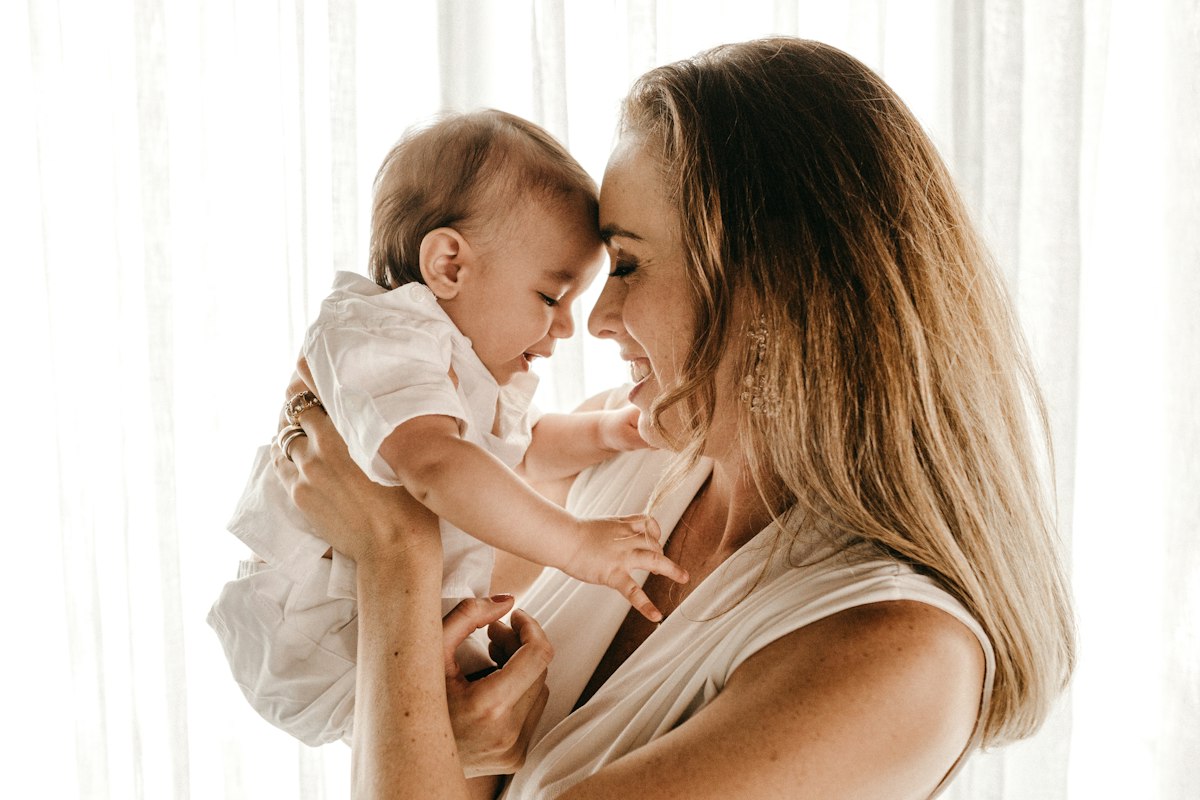
What determines attachment is not duration but sensitive responsiveness. Attachment patterns, genuine attachment disorders, risk factors and how to strengthen the bond.
"If you hold them too much you'll spoil them" is a belief repeated across generations but not confirmed by developmental science.
The truth is the opposite: an infant whose needs are met consistently cries less, settles more easily and becomes more independent over time. Secure attachment is not an obstacle to independence but its foundation.
This article sets out how attachment forms, which attachment patterns exist, what genuine attachment disorders are, and when assessment is needed.
Key Points
- What determines attachment is not duration but the capacity to respond sensitively.
- Holding an infant does not spoil them; it builds the foundation of secure attachment.
- An attachment pattern is not a diagnosis; disorder is a separate and rare condition.
- Genuine attachment disorders develop on a background of severe neglect or disrupted care.
- An attachment pattern can change; even a single secure relationship is protective.
- The term "attachment problem" is used incorrectly to explain behavioural difficulties.
How Does Attachment Form?
Attachment is the relationship an infant forms with the person they turn to when distressed. That relationship determines whom the infant will go to when they sense danger, and what they will find there.
The basic mechanism is simple and rests on repetition: the infant signals a need, the caregiver notices, interprets correctly and responds in time. When this cycle is repeated thousands of times an expectation forms in the infant — "when I need something, someone comes."
What Is Decisive?
The capacity to respond sensitively. The caregiver noticing the infant's signal, interpreting correctly what it means, and responding appropriately. This does not require being perfect.
Predictability. A similar response arriving in the same situation allows the infant to build a model. Inconsistent care is harder than care that is consistent but distant.
Repair. A caregiver cannot always respond correctly; what matters is noticing the mismatch and repairing it. Research shows that the capacity for repair, rather than perfect attunement, is decisive.
Quality, not duration. This is working parents' most common anxiety. What determines attachment is not the number of hours spent together but the quality of that time.
How Many People Does an Infant Attach To?
An infant can attach not to one person but to several: mother, father, carer, grandparent. This is not a problem but a protective circumstance.
A hierarchy generally forms among attachment figures; when distressed, the infant seeks their primary figure. But having more than one secure relationship increases a child's resilience.
Attachment Patterns
Attachment patterns are not diagnoses; they are developmental categories describing the quality of a relationship.
Secure attachment. The child uses the caregiver as a secure base: they explore their surroundings while the caregiver is present, become upset when they leave, settle easily when they return and go back to play. It is the pattern seen in the majority of the population.
Avoidant pattern. The child appears not to respond to separation and does not seek closeness on reunion. Although they appear independent from the outside, physiological measures show that stress persists. It generally develops in relationships where signals of need consistently receive a distant response.
Anxious-ambivalent pattern. The child responds intensely, has difficulty settling on reunion, and both seeks closeness and pushes it away. It is associated with inconsistent care: sometimes a response comes, sometimes it does not.
Disorganised pattern. Contradictory behaviours are seen in the child: freezing while approaching, appearing disoriented, appearing frightened. It arises in relationships where the caregiver is both a source of safety and a source of fear; it is associated with neglect, violence and a history of unresolved trauma.
None of these patterns is a diagnosis on its own. Insecure patterns are common and do not in themselves mean disorder; but they are associated with increased risk.
The distribution of these patterns varies with culture and care arrangements. One pattern being common does not make it "normal" and another "abnormal"; all are ways of adapting to the relationship the child is in.
It also matters to know that a pattern can change over time. When care circumstances change — for example when a caregiver's depression is treated or the family's living conditions improve — the pattern can shift towards secure.
Genuine Attachment Disorders
Attachment disorders are rare and develop only in particular circumstances: severe neglect, continual change of caregiver, or institutional care in the early period.
Reactive Attachment Disorder
When distressed, the child does not turn to the caregiver, does not seek comfort, and does not respond to comfort offered. Social and emotional responses are restricted; positive emotion is markedly reduced. Unexplained periods of irritability, sadness and fear may be seen.
Disinhibited Social Engagement Disorder
This is the opposite presentation. The child behaves with excessive familiarity towards unfamiliar adults, approaches without hesitation, takes their hand, sits on their lap. They do not hesitate to go off with a stranger.
Families often interpret this as being "very sociable"; yet the complete absence of age-appropriate wariness is a warning sign.
What Is It Confused With?
These two conditions can be confused with autism spectrum disorder, attention deficit hyperactivity disorder, anxiety disorders and post-traumatic stress disorder. The distinction is made by taking a detailed care history.
The term "attachment problem" is used very broadly in everyday language. Anger outbursts, not doing as told, or clinginess are not in themselves indicators of an attachment disorder.
Risk Factors
- Institutional care in the early period
- Frequent change of caregiver, multiple placements
- Severe neglect, basic needs not being met
- Untreated depression or substance use in the caregiver
- Domestic violence
- Unresolved trauma or loss in the parent
- Prolonged separations, hospital admissions
- Very young parenthood and absence of social support
The presence of these factors does not mean a disorder will certainly develop; it means close monitoring is needed. Protective factors are equally decisive: the presence of a consistent and sensitive caregiver, extended family support, and protection of the caregiver's own mental health can offset a substantial part of the risk.
Strengthening Attachment
In Infancy
Respond to crying. Responding to an infant's crying does not spoil them. Infants who receive consistent responses in the early period cry less in the following months.
Build reciprocity. Respond when the infant makes a sound, and wait when they stop. This turn-taking is the first form of communication.
Make contact. Skin contact, carrying and holding directly support the infant's regulation.
Establish routine. Predictable feeding and sleep routines nourish a sense of security.
In the Preschool Years and After
Be a secure base. Support the child when they set off to explore, and be a place they can return to when they struggle. Overprotection prevents exploration; indifference removes the place to return to.
Name the feeling. Saying "you're angry, I understand" teaches that a feeling can be regulated.
Demonstrate repair. A parent acknowledging a mistake and repairing it increases the relationship's resilience. Flawless parenting is not required; parenting that can repair is.
Make separations predictable. Say where you are going and when you will be back, and return at the time you said.
Set aside uninterrupted time. A short period in which your attention is entirely on the child is more effective than a long but fragmented one.
How Does Attachment Look at Different Ages?
Attachment is not expressed the same way at every age. The same secure pattern shows itself through different behaviours at different ages.
Infancy (0-12 months)
In the first months an infant does not yet distinguish a particular person; they accept any adult who soothes them. From six months, discrimination becomes pronounced and stranger anxiety appears.
Between eight and twelve months separation anxiety reaches its peak. An infant crying on separation from their caregiver in this period is an expected sign of development; it shows that attachment has formed.
The Toddler Years (1-3)
Secure base behaviour is seen most clearly in this period. The child moves around the room, sets off to explore, turns back to look at their caregiver and then continues. This looking back is one of the most visible signs of secure attachment.
At this age the child seeks closeness when distressed and returns quickly to play once settled. Marked difficulty settling, or not seeking closeness at all, are situations requiring attention.
Preschool and School Age
The need for physical closeness decreases and is replaced by verbal sharing. When distressed, the child begins to tell rather than climb onto a lap.
In this period the sign of secure attachment is the child being able to tell their family about a bad experience. Concealing something negative that happened to them may call for the trust in the relationship to be reviewed.
Adolescence
In adolescence attachment does not break; it changes form. The adolescent turns towards peers and appears to move away from the family; yet in a genuinely difficult situation they still turn to the family.
In this period the sign of secure attachment is the adolescent being able to argue and the relationship then being repairable. The complete absence of conflict may be a sign not of trust but of distance.
Common Misconceptions
"If you hold an infant they'll be spoilt." Developmental science does not support this. Infants who receive consistent responses in the early period cry less and settle more easily in the following months.
"Leaving them to cry builds independence." In early infancy this approach can lead to the infant giving up signalling; that is not independence but withdrawal.
"A working mother damages attachment." What determines attachment is quality, not duration. Where the caregiver is consistent and the quality of time at home is preserved, risk does not increase.
"Attachment forms in the first three years and does not change after that." The early period matters but is not determinative. An attachment pattern can change; even a single secure relationship formed later is protective.
"Every behavioural problem is an attachment problem." Anger outbursts, not doing as told and clinginess are not in themselves indicators of an attachment disorder.
Attachment in Foster Care and Adoption
Attachment takes time to form in a child settling into a new family, and this process works differently from how it does in a biological family.
What Is Expected in the Early Period?
In the first weeks most children present as compliant and untroubled. This period usually reflects not genuine adjustment but watchful waiting. The child is observing the new environment and the adults' responses.
Real difficulty generally begins in the second month and after: as the child comes to trust, they begin to test, push boundaries and show anger. Families often interpret this period as a setback; yet it is usually a sign that the relationship is deepening.
What Helps the Family?
Predictability. Routine, clear rules and consistent responses are the strongest source of security for a child whose previous life has been unpredictable.
Patience and time. Attachment is not established by instruction. The child must be allowed to come closer at their own pace.
Not denying the past. Being able to talk about the child's previous life matters for identity development. Ignoring that past conveys that a part of them is not accepted.
Support for the family itself. Parents also need support in this process. Burnout is common in a parent whose closeness is rejected or met with anger, and this directly affects their attitude towards the child.
In work conducted on these processes in Ankara, meeting with the family as regularly as with the child is an integral part of the treatment plan.
Assessment and Treatment
What Happens in the Assessment?
In Assoc. Prof. Mehtap Eroglu's approach, assessment begins with a detailed care history: who provided care from birth, how many times this changed, whether there were separations, whether there is a history of neglect.
Observation then follows: the child-parent interaction, whom the child turns to when distressed, how they respond to comfort, and their attitude towards a stranger.
For differential diagnosis, autism spectrum disorder, language delay, attention deficit and a history of trauma are screened for. This step is critical; a diagnosis of attachment disorder should not be made where the care history does not support it.
The parent's own attachment history and unresolved losses are also part of the process.
Treatment
Relationship-based work is at the centre of treatment. The aim is not to change the child in isolation but to improve the quality of the caregiver-child relationship.
This work focuses on increasing the caregiver's capacity to respond sensitively, on reading the child's signals correctly, and on strengthening the capacity for repair. Methods involving video feedback are effective in this field.
Where the caregiver has depression, trauma or substance use, treating that comes before any intervention directed at the child.
Medication is not directed at attachment disorder itself; it is considered only for accompanying conditions.
For detail on early development, see our infant psychiatry guide.
Expert Opinion
According to Assoc. Prof. Mehtap Eroglu, the most widespread error in this field is the use of the term "attachment problem" for every behavioural difficulty. Anger outbursts, not doing as told and clinginess are not in themselves indicators of an attachment disorder. Genuine attachment disorders are rare and develop on a background of severe neglect or disrupted care.
The second point is the belief about spoiling. Responding to an infant's crying does not create dependence; on the contrary, infants who receive consistent responses cry less and settle more easily in the following months.
Assoc. Prof. Mehtap Eroglu also emphasises that perfect parenting is not required. What is decisive is not responding correctly every time but noticing a mismatch and being able to repair it. The capacity for repair is a stronger protective factor than flawlessness.
Assoc. Prof. Mehtap Eroglu notes that conflicts in adolescence do not mean attachment has broken down. In this period attachment does not break but changes form; the adolescent being able to argue and the relationship then being repairable is the sign of a secure pattern. The complete absence of conflict may indicate distance rather than trust.
The fourth point concerns working parents' anxiety. What determines attachment is not the number of hours spent together but the quality of that time. A short but uninterrupted period together is more valuable than a long but fragmented one.
Assessment and Appointment Process in Ankara
Referrals related to attachment in Ankara come in two forms. In the first, families present preventively out of concern about the quality of their own relationship; this group is mostly supported through information and parent counselling. The second consists of requests for assessment relating to children in foster care and adoption processes.
In the assessment conducted by Assoc. Prof. Mehtap Eroglu in Ankara, most time is given to detailing the care history. A care history consistent with it is essential for a diagnosis of attachment disorder; where that history is absent, the picture must be explained by another diagnosis.
A concern families in Ankara frequently raise is whether attachment will be damaged after returning to work. Where the caregiver is consistent and the quality of time at home is preserved, this concern is in most cases unfounded.
In assessments relating to foster care and adoption processes in Ankara, the availability of records of the child's previous care history directly determines the quality of the process; these records are often incomplete and the history is completed through interviews with the family.
What families in Ankara find useful to bring: information about care arrangements from birth onwards, any history of separations and placements, and developmental monitoring records.
If you would like to arrange an assessment of your child's early development and relationship patterns in Ankara, you can find information about the infant psychiatry service and request an appointment.
In Summary
What determines attachment is not duration but the capacity to respond sensitively and predictability. Holding an infant does not spoil them; it builds the foundation of secure attachment.
Attachment patterns are not diagnoses. Genuine attachment disorders are rare and develop on a background of severe neglect, continual change of caregiver or early institutional care.
Perfect parenting is not required; noticing a mismatch and being able to repair it is a stronger protective factor than flawlessness.
An attachment pattern can change, and even a single secure relationship is protective. For detail on separation responses, see our article on separation anxiety disorder.
Frequently Asked Questions
Bebeği çok kucağa alırsam şımarır mı?
Hayır. Gelişim bilimi bunu desteklemez. Erken dönemde ihtiyacı düzenli olarak karşılanan bebekler ilerleyen aylarda daha az ağlar, daha kolay yatışır ve zamanla daha bağımsız olur. Güvenli bağlanma bağımsızlığın engeli değil, temelidir.
Çalışıyorum, bağlanma zedelenir mi?
Bağlanmayı belirleyen birlikte geçirilen saat sayısı değil, o zamanın niteliğidir. Bakım verenin sürekli olması ve evde geçirilen zamanın niteliği korunduğunda risk artmaz. Kısa ama dikkatin tümüyle çocukta olduğu bir zaman, uzun ama bölünmüş bir zamandan daha değerlidir.
Bağlanma örüntüsü tanı mıdır?
Hayır. Güvenli, kaçıngan, kaygılı-kararsız ve dağınık örüntüler ilişkinin niteliğini tanımlayan gelişimsel kategorilerdir, tanı değildir. Güvensiz örüntüler yaygındır ve tek başına bozukluk anlamına gelmez; yalnızca risk artışıyla ilişkilidir. Örüntü zaman içinde değişebilir.
Gerçek bağlanma bozukluğu nedir?
Enderdir ve yalnızca ağır ihmal, bakım verenin sürekli değişmesi ya da erken dönem kurumsal bakım zemininde gelişir. İki tablo vardır: reaktif bağlanma bozukluğunda çocuk zorlandığında teselli aramaz ve sunulan teselliye yanıt vermez; dezinhibe sosyal iletişim bozukluğunda ise tanımadığı erişkinlere karşı aşırı yakın davranır.
Çocuğum herkese sarılıyor, iyi bir şey mi?
Yaşa uygun çekingenliğin hiç bulunmaması uyarıcı bir bulgudur. Tanımadığı erişkinlere çekinmeden yaklaşma, elini tutma, kucağına oturma ve yabancıyla uzaklaşmakta tereddüt etmeme, dezinhibe sosyal iletişim bozukluğu açısından değerlendirilmelidir. Aileler bunu çoğu zaman 'sıcakkanlılık' olarak yorumlar.
Mükemmel ebeveyn olmak zorunda mıyım?
Hayır. Araştırmalar tam uyumun değil, onarım kapasitesinin belirleyici olduğunu gösteriyor. Bakım veren her zaman doğru yanıt veremez; önemli olan uyumsuzluğu fark edip onarabilmektir. Kusursuz ebeveynlik gerekli değildir, onarabilen ebeveynlik gereklidir.
Bağlanma ilk üç yılda kurulup sonra değişmez mi?
Erken dönem önemlidir ancak belirleyici değildir. Bağlanma örüntüsü değiştirilebilir; bakım koşulları düzeldiğinde, örneğin bakım verenin depresyonu tedavi edildiğinde örüntü güvenliye doğru kayabilir. Sonradan kurulan tek bir güvenli ilişki bile koruyucudur.
Ergenimle sürekli tartışıyoruz, bağlanma bozuldu mu?
Hayır. Ergenlikte bağlanma kopmaz, biçim değiştirir. Ergen akranlarına yönelir ve uzaklaşıyor görünür ama gerçekten zorlandığı bir durumda hâlâ aileye yönelir. Güvenli bağlanmanın göstergesi tartışabilmek ve ardından ilişkiyi onarabilmektir; hiç çatışma olmaması güvenin değil mesafenin işareti olabilir.
Evlat edindiğimiz çocuk ilk ay uyumluydu, şimdi zorlanıyoruz. Neden?
İlk haftalardaki uyumlu görünüm çoğu zaman gerçek uyumu değil, temkinli bir bekleyişi yansıtır; çocuk ortamı gözlemlemektedir. Asıl zorlanma genellikle ikinci ayda başlar: çocuk güvendikçe test etmeye, sınırları zorlamaya ve öfkesini göstermeye başlar. Bu çoğu zaman ilişkinin derinleştiğinin işaretidir.
Tedavi nasıl yapılır?
Merkezde ilişki temelli çalışma yer alır; amaç çocuğu tek başına değiştirmek değil, bakım veren-çocuk ilişkisinin niteliğini iyileştirmektir. Çalışma duyarlı yanıt verebilme kapasitesini artırmaya ve onarım becerisini güçlendirmeye odaklanır. Bakım verende depresyon veya travma varsa, bunun tedavisi önce gelir.
References
- Bowlby, J. (1969). Attachment and Loss, Vol. 1: Attachment. Basic Books.
- Ainsworth, M. D. S., Blehar, M. C., Waters, E., & Wall, S. (1978). Patterns of Attachment: A Psychological Study of the Strange Situation. Erlbaum.
- Main, M., & Solomon, J. (1990). Procedures for Identifying Infants as Disorganized/Disoriented During the Ainsworth Strange Situation. In: Attachment in the Preschool Years. University of Chicago Press.
- Zeanah, C. H., Chesher, T., & Boris, N. W. (2016). Practice Parameter for the Assessment and Treatment of Children and Adolescents with Reactive Attachment Disorder and Disinhibited Social Engagement Disorder. JAACAP, 55(11), 990-1003.
- Tronick, E., & Gianino, A. (1986). Interactive Mismatch and Repair: Challenges to the Coping Infant. Zero to Three, 6(3), 1-6.
- Rutter, M., Sonuga-Barke, E. J., & Castle, J. (2010). Investigating the Impact of Early Institutional Deprivation on Development. Monographs of the Society for Research in Child Development, 75(1), 1-20.
- Bakermans-Kranenburg, M. J., van IJzendoorn, M. H., & Juffer, F. (2003). Less Is More: Meta-Analyses of Sensitivity and Attachment Interventions in Early Childhood. Psychological Bulletin, 129(2), 195-215.
- Bick, J., & Nelson, C. A. (2016). Early Adverse Experiences and the Developing Brain. Neuropsychopharmacology, 41(1), 177-196.
- Allen, J. P., & Tan, J. S. (2016). The Multiple Facets of Attachment in Adolescence. In: Handbook of Attachment (3rd ed.). Guilford Press.
This article is for general information and does not replace an individual medical evaluation. If you are concerned about your child, please consult a child and adolescent psychiatrist. In an emergency call 112.

Doç. Dr. Mehtap Eroğlu
Associate Professor, Child and Adolescent Psychiatrist. Completed her specialty training in child and adolescent psychiatry at Ankara University. Over 15 years of clinical experience.
View Full ProfileRelated service: Neurodevelopmental assessment in Ankara
Related Articles

Gifted Children: Signs, Assessment and Support
Postnatal Depression and Its Effect on the Baby

What is Neurodevelopmental Assessment? Scientific Foundations of Child Development Monitoring

WISC-R Intelligence Test: Cognitive Assessment Guide for Children

Infant Psychiatrist Ankara: Early Mental Health and Development Guide