
EMDR is not hypnosis, does not erase memories and needs no detailed account. How it is applied in children, how a session goes, and when it is not suitable.
When EMDR is proposed for a child who has experienced a traumatic event, families' first reaction is usually hesitation. The name of the method is technical and, seen from outside, the practice looks unfamiliar: the therapist moves a finger and the child follows with their eyes.
That image does not convey what the method does and frequently creates mistaken associations. EMDR is not hypnosis, it does not erase memories, and it does not require the child to recount the event from beginning to end.
This article sets out what EMDR is, how it is applied in children, its evidence position, when it is appropriate, and what families should pay attention to.
Key Points
- EMDR is a structured psychotherapy method directed at processing a traumatic memory.
- It is not hypnosis; the child is awake and in control throughout the session.
- It does not erase the memory; it reduces the distress the memory carries.
- In children the method is adapted through play, drawing and storytelling.
- The level of evidence is strong in post-traumatic stress disorder and it appears in guidelines.
- Processing does not begin until safety is established; where danger is ongoing, protection comes first.
What Is EMDR?
EMDR rests on the assumption that a traumatic memory remaining unprocessed in the mind leads to symptoms persisting.
Under ordinary conditions experiences are processed over time: the event is remembered but no longer causes the same intensity of distress, and is experienced as being in the past. In traumatic experiences that processing may not be completed; the memory is stored together with the emotion, bodily sensation and beliefs present at the moment it was first experienced.
For that reason a small reminder — a sound, a smell, a similar setting — brings the memory back as it was. For the child the event is not in the past but still "now".
EMDR's aim is to complete the processing of that memory.
What Does Bilateral Stimulation Do?
The best-known component of the method is that while the child focuses on the memory they simultaneously receive bilateral stimulation: eye movements, alternating taps or alternating sounds.
Several explanations have been proposed for how this component works. The most widely accepted is that occupying working memory with two tasks at once reduces the vividness and emotional intensity of the memory.
Debate about the mechanism continues; but the method as a whole has been demonstrated to be effective.
The Eight-Phase Structure
EMDR is not a free-flowing conversation but a structured protocol. It consists of history taking, preparation, assessment, processing, installation of a positive belief, body scan, closure and re-evaluation.
This structure is preserved in children too; what changes is how the phases are carried out.
How Is It Applied in Children?
Children are not small adults; the protocol is adapted to age.
Sessions are shorter. Attention span is limited in young children; sessions may be planned shorter and more frequent.
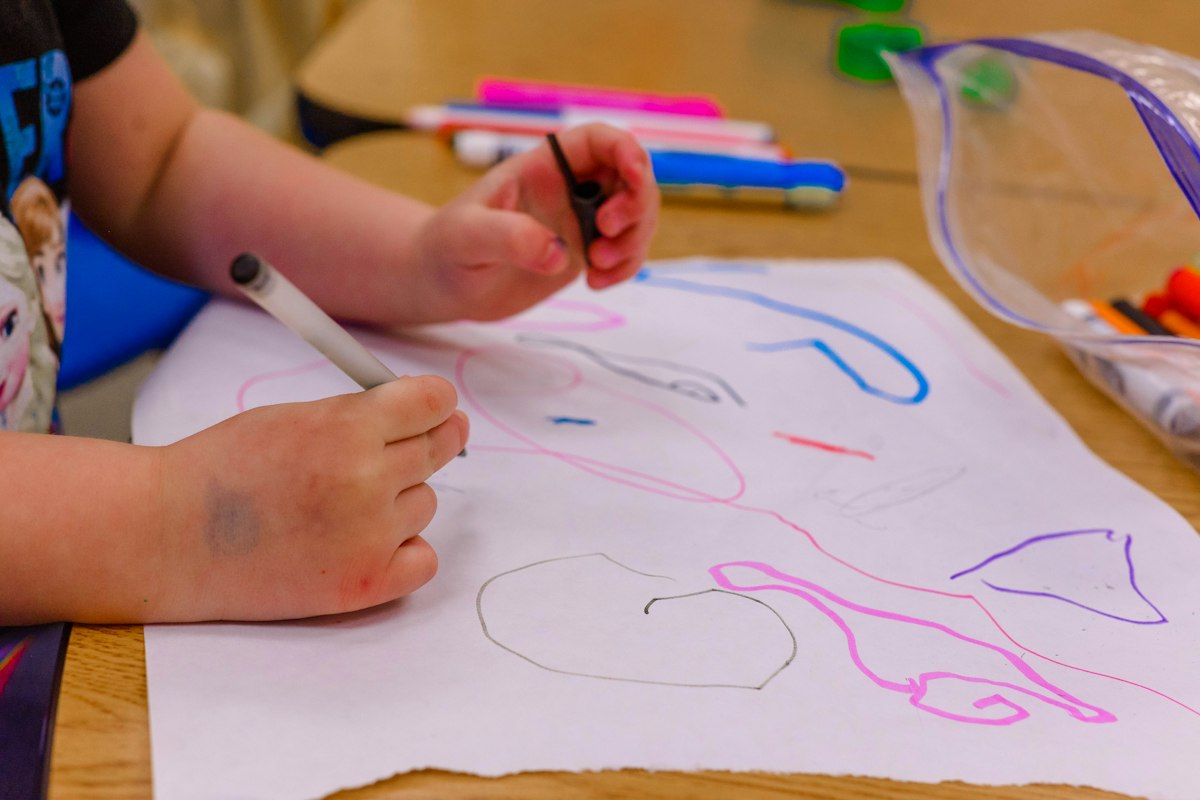
Play and drawing are used. A child who cannot describe a memory in words can show it through drawing or play. Processing is conducted through that material.
Storytelling. Particularly at younger ages, the event is turned into a story constructed jointly by the parent and therapist, and processing is carried out while the child listens to that story.
The form of stimulation changes. Instead of eye movements, alternating taps or alternating light taps the child makes while holding their own arms may be used.
Concrete scales. The severity of distress is tracked with visual scales the child can understand: containers, the distance between their hands, or facial expressions.
Parental involvement. In young children a parent's presence in the session is often preferred. The parent is both a source of safety and a source of information about the event.
Does the Child Have to Describe the Event?
No. A distinctive feature of EMDR is that it does not require a detailed verbal account.
It is enough for the child to hold the most distressing part of the memory in mind; they do not have to describe the details out loud. This feature makes the method useful in children who struggle to talk or avoid describing what happened.
How Many Sessions Does It Take?
In a recent trauma related to a single event, the process can be relatively short. Where there is a history of repeated or prolonged maltreatment, the preparation phase takes longer and the total number of sessions increases.
The duration cannot be stated definitively at the outset; but a plan is established that proceeds in stages and is regularly re-evaluated.
How Does a Session Go?
What families most want to know is what actually happens in the room. The flow of a typical process is summarised below.
The First Consultations: History and Preparation
No processing is done in the first sessions. At this stage the history of the event is taken, symptoms are mapped and the child's emotion-regulation skills are assessed.
In the preparation phase the child is taught concrete coping tools. One of the most commonly used is the "safe place" exercise: the child pictures a real or imagined place where they feel safe and learns to summon that image when they want to.
The next phase does not begin until it is certain that the child can use these tools. The length of the preparation phase varies markedly with the type of trauma and the child's situation.
Processing Sessions
In the processing phase, bilateral stimulation is applied while the child holds the distressing part of the memory in mind. There are brief pauses and the child is asked what they noticed.
The answer may be an image, a feeling, a bodily sensation or a thought. The process continues until the level of distress has markedly decreased.
The child can stop at any moment. This is explained clearly in the preparation phase and is usually established through a concrete signal, such as raising a hand.
Closure and Between Sessions
Each session is completed with the child in a settled state. If processing is incomplete, closure work is done and the child does not leave the session with intense feeling.
Temporary restlessness, an increase in dreams or more frequent thoughts about the memory may be seen between sessions. This is expected and generally subsides within a few days; explaining it to the family in advance makes the process easier.
Age-Specific Application
Preschool (3-6)
At this age a child cannot describe the memory in words, so the storytelling method is used. The parent and therapist together turn the event the child experienced into a simple story. Bilateral stimulation is applied while the child listens to that story.
The form of stimulation also changes: instead of eye movements, alternating light taps on the knees or alternating taps the child makes while holding their own arms are preferred.
At this age a parent's presence in the session is almost a rule; the child's sense of safety depends on it.
Primary School (7-11)
The child can now describe the event to some extent and use concrete scales. The severity of distress is tracked with the distance between their hands, containers or facial expressions.
Drawing is a powerful tool at this age: the child draws the memory, processing is conducted through the drawing, and the change in the drawing is followed as the process advances.
At this age a parent may be present at the beginning and end rather than throughout.
Adolescence
In adolescents the application approaches the adult protocol. Verbal expression is sufficient and eye movements can be used.
What is decisive at this age is the adolescent's own motivation. Where an adolescent is brought by the family but does not want the process, cooperation must be established first.
Clarifying the framework of confidentiality at the outset also matters in adolescents: what will be shared with the family, and in which situations sharing is obligatory, is discussed openly.
The Evidence Position
In post-traumatic stress disorder, EMDR is among the methods recommended in international guidelines.
In comparative studies conducted with children and adolescents, EMDR has shown similar effectiveness to trauma-focused cognitive behavioural therapy. No general superiority has been demonstrated between the two methods; the choice is made according to the child's characteristics, the family's preference and the practitioner's competence.
In Which Situations Is It Used?
- Post-traumatic stress disorder
- Traumatic experiences related to a single event: an accident, a fire, a dog attack, a medical procedure
- Symptoms after a disaster
- Being stuck in a process of loss and grief
- Specific fears related to trauma
- Anxiety and avoidance related to trauma
When Is It Not the First Option?
EMDR is not the solution to every psychological difficulty, and in some situations another approach takes priority.
Where danger is ongoing. If the child is still in a harmful environment, the priority is protection rather than processing. Processing does not begin until safety is established.
Where emotion regulation is very weak. In a child who cannot cope with intense feeling, skill-building work is done first.
Where there is no history of trauma. In conditions such as attention deficit, learning disorder or autism spectrum disorder, EMDR is not a method that treats the condition.
In severe and unstabilised psychiatric presentations. Here the priority is stabilisation and the necessary medical treatment.
Comparison with Other Methods
The question families often ask is which therapy is better. For the comparison to be meaningful it helps to know what each method does.
Trauma-Focused Cognitive Behavioural Therapy
In this method the child constructs a narrative about the event and that narrative is processed gradually. Emotion-regulation skills, cognitive restructuring and parent sessions are its core components.
Homework is part of the process and requires the family's regular involvement.
The Difference Between the Two
The most marked difference is the weight given to verbal narrative. In trauma-focused cognitive behavioural therapy, constructing a narrative is a central component; in EMDR a detailed verbal account is not required.
That difference can make EMDR a practical option in children who struggle to talk, whose language development is limited, or who markedly avoid describing what happened.
By contrast, in a child who can do homework and whose verbal expression is strong, trauma-focused cognitive behavioural therapy is equally suitable.
How Is the Choice Made?
No general superiority has been demonstrated in comparative studies. The factors determining the choice are: the child's age and verbal ability, the type and duration of the trauma, accompanying conditions, the family's capacity to participate, and which method the practitioner is competent in.
The last point should not be underestimated: a well-delivered method is better than a "better" method delivered badly.
Common Misconceptions
"EMDR is hypnosis." No. The child is awake throughout the session, knows what is happening and can stop at any moment. Control rests with the child.
"It erases the memory." No. The memory remains; what changes is the reduction in the distress and bodily response it carries. The child remembers the event but is no longer affected with the same intensity.
"It finishes in one session." In some simple, single-event situations the process can be short; but presenting this as a general promise is not accurate.
"It's easy because you don't have to talk." A detailed account is not required, but the process can be emotionally demanding. Temporary restlessness between sessions may be seen, and this is expected.
"It can't be done if the child is very young." It can be applied with adapted protocols in preschool children too; what changes is how it is delivered.
The Family's Role
In the EMDR process the family's contribution is not only bringing the child to sessions.
A source of information. The details of the event, the child's subsequent responses and their triggers are mostly learned from the family.
A source of safety. In young children a parent's presence provides the sense of safety needed for processing to be possible.
Support between sessions. Temporary emotional fluctuation may be seen after processing sessions. Preserving routine and providing additional closeness matters in this period.
Regulating their own response. The response of a parent who witnessed the same event or was affected by it directly influences the child's recovery. Where needed, separate support is arranged for the parent.
What to Look for in Choosing a Practitioner
- Basic professional qualification in mental health
- EMDR training from a recognised training programme
- Experience working with children and adolescents, and training in the child protocol
- Receiving supervision
- Being able to explain the phases of the process and set expectations clearly
- Being able to work with a child psychiatrist where needed
A practitioner trained in the adult protocol working with a child is not sufficient; the child adaptations require separate training.
It should be considered normal to ask these questions directly in Ankara; a practitioner who does not hesitate to explain their training and experience is more trustworthy than one who receives the question with discomfort.
Expert Opinion
According to Assoc. Prof. Mehtap Eroglu, families' most widespread mistaken expectation about EMDR is that the method will erase the memory. The aim is not to remove the memory; the memory remains, and what changes is the reduction in the distress it carries. Where this expectation is not corrected at the outset, families may judge the process a failure.
The second point is that processing is not carried out without safety. Where the child is still in a harmful environment, the priority is protection. When that sequence is skipped, the method does not help.
Assoc. Prof. Mehtap Eroglu also emphasises the importance of choosing a practitioner. A practitioner trained in the adult protocol working with a child is not sufficient; the child adaptations based on play, drawing and storytelling require separate training and experience.
Assoc. Prof. Mehtap Eroglu notes that the preparation phase must not be skipped. Moving to processing without being certain the child can use their emotion-regulation tools can lead to a session ending prematurely and the child disengaging from the process.
Assoc. Prof. Mehtap Eroglu states that the strongest factor determining success in adolescents is the adolescent's own motivation. Where an adolescent is brought by the family but does not want therapy, cooperation must be established before moving to processing; when that step is skipped the process ends early.
The fourth point is that the process can be emotionally demanding. Because a detailed account is not required the method can seem easy; yet temporary restlessness may be seen between sessions. The family knowing this in advance reduces the likelihood of the process being abandoned.
Assessment and Appointment Process in Ankara
Post-trauma referrals in Ankara arrive across a wide range, from experiences related to a single event to histories of prolonged maltreatment. The question families often ask is which therapy method is better. No general superiority between EMDR and trauma-focused cognitive behavioural therapy has been demonstrated in comparative studies; the choice is made according to the child's characteristics.
In the assessment conducted by Assoc. Prof. Mehtap Eroglu in Ankara, the diagnosis is clarified first and the safety situation established. The presence of trauma symptoms does not by itself determine the choice of method; accompanying conditions, the child's age, verbal ability and the family's capacity to participate are also weighed.
A reservation families in Ankara frequently raise is the worry that the child will relive the event. The method not requiring a detailed verbal account, and emotion-regulation skills being worked on in the preparation phase, largely addresses that concern.
In referrals in Ankara it appears that the most practical criterion determining which method a child will progress better with is verbal ability; EMDR offers a workable option in children who markedly struggle to describe what happened.
What families in Ankara find useful to bring: information about the date and details of the event, when symptoms began, any previous assessment reports and school observations.
If you would like to arrange a trauma-focused assessment for your child in Ankara, you can find information about the psychotherapy service and request an appointment.
In Summary
EMDR is a structured psychotherapy method directed at processing a traumatic memory. It is not hypnosis, it does not erase memories, and it does not require a detailed verbal account.
In children the method is adapted through play, drawing and storytelling; in young children parental involvement is part of the process.
The level of evidence is strong in post-traumatic stress disorder, and in comparative studies it has shown similar effectiveness to trauma-focused cognitive behavioural therapy.
Where danger is ongoing the priority is protection; processing does not begin until safety is established. It also matters that the practitioner has been trained in the child protocol.
For trauma symptoms and diagnostic criteria, see our article on post-traumatic stress disorder.
Frequently Asked Questions
EMDR hipnoz mu?
Hayır. Çocuk seans boyunca uyanıktır, ne olduğunu bilir ve istediği anda durdurabilir. Denetim çocuktadır ve bu hazırlık aşamasında açıkça anlatılır; genellikle elini kaldırmak gibi somut bir işaret belirlenir.
EMDR anıyı siler mi?
Hayır. Anı kalır; değişen şey anının taşıdığı rahatsızlığın ve bedensel tepkinin azalmasıdır. Çocuk olayı hatırlar ama artık aynı yoğunlukta etkilenmez. Bu beklentinin baştan düzeltilmemesi, ailenin süreci haksız yere başarısız saymasına yol açar.
Çocuğum olayı anlatmak zorunda mı?
Hayır. EMDR'nin belirgin bir özelliği ayrıntılı sözel anlatı gerektirmemesidir. Çocuğun anının en rahatsız edici bölümünü zihninde tutması yeterlidir. Bu özellik, konuşmakta zorlanan, dil gelişimi sınırlı olan ya da anlatmaktan kaçınan çocuklarda yöntemi kullanışlı kılar.
Küçük çocuklarda uygulanabilir mi?
Evet, uyarlanmış protokollerle. Okul öncesinde öyküleştirme kullanılır: ebeveyn ve terapist olayı basit bir öykü hâline getirir, çocuk dinlerken uyarım uygulanır. Göz hareketleri yerine dizlere dönüşümlü hafif vuruşlar tercih edilir ve ebeveynin seansta bulunması neredeyse kuraldır.
Kaç seans sürer?
Tek bir olaya bağlı yakın zamanlı travmada süreç görece kısa olabilir. Yinelenen ya da uzun süreli örselenme öyküsünde hazırlık aşaması uzar ve toplam seans sayısı artar. Süre baştan kesin söylenemez; aşama aşama ilerleyen ve düzenli yeniden değerlendirilen bir plan kurulur.
EMDR mi, travma odaklı bilişsel davranışçı terapi mi daha iyi?
Karşılaştırmalı çalışmalarda genel bir üstünlük gösterilmemiştir. Seçimi belirleyen etkenler çocuğun yaşı ve sözel ifade becerisi, travmanın türü ve süresi, eşlik eden tablolar, ailenin katılım kapasitesi ve uygulayıcının hangi yöntemde yetkin olduğudur. İyi uygulanan bir yöntem, kötü uygulanan 'daha iyi' bir yöntemden üstündür.
Hangi durumlarda uygun değil?
Çocuk hâlâ örseleyici bir ortamdaysa öncelik korunmadır; güvenlik sağlanmadan işleme aşamasına geçilmez. Duygu düzenleme çok zayıfsa önce beceri çalışması yapılır. Travma öyküsü yoksa, DEHB veya otizm gibi tablolarda EMDR tabloyu tedavi eden bir yöntem değildir.
Seanslar zor geçer mi?
Ayrıntılı anlatım gerekmediği için yöntem kolay sanılabilir; ancak süreç duygusal olarak zorlayıcı olabilir. Seans aralarında geçici huzursuzluk, rüya artışı ya da anıyla ilgili düşüncelerin çoğalması görülebilir. Bu beklenen bir durumdur ve genellikle birkaç gün içinde geriler.
Uygulayıcı seçerken neye dikkat etmeliyim?
Ruh sağlığı alanında temel mesleki yeterlilik, tanınmış bir programdan alınmış EMDR eğitimi ve özellikle çocuk ve ergenlerle çalışma deneyimi ile çocuk protokolü eğitimi. Erişkin protokolüyle eğitim almış bir uygulayıcının çocukla çalışması yeterli değildir; çocuk uyarlamaları ayrı eğitim gerektirir.
Ailenin rolü ne?
Aile yalnızca çocuğu getiren taraf değildir. Olayın ayrıntıları ve tetikleyiciler çoğunlukla aileden öğrenilir; küçük çocuklarda ebeveynin varlığı güvenlik hissini sağlar; seans aralarında rutinin korunması ve ek yakınlık önemlidir. Aynı olaydan etkilenmiş bir ebeveyn için ayrı destek planlanabilir.
References
- Shapiro, F. (2018). Eye Movement Desensitization and Reprocessing (EMDR) Therapy: Basic Principles, Protocols, and Procedures (3rd ed.). Guilford Press.
- World Health Organization (2013). Guidelines for the Management of Conditions Specifically Related to Stress. Geneva: WHO.
- National Institute for Health and Care Excellence (2018). Post-Traumatic Stress Disorder (NG116). London: NICE.
- Moreno-Alcazar, A., Treen, D., Valiente-Gomez, A., et al. (2017). Efficacy of Eye Movement Desensitization and Reprocessing in Children and Adolescents with Post-Traumatic Stress Disorder: A Meta-Analysis. Frontiers in Psychology, 8, 1750.
- Rodenburg, R., Benjamin, A., de Roos, C., Meijer, A. M., & Stams, G. J. (2009). Efficacy of EMDR in Children: A Meta-Analysis. Clinical Psychology Review, 29(7), 599-606.
- de Roos, C., van der Oord, S., Zijlstra, B., et al. (2017). Comparison of EMDR Therapy, Cognitive Behavioral Writing Therapy, and Wait-List in Pediatric PTSD Following Single-Incident Trauma. Journal of Child Psychology and Psychiatry, 58(11), 1219-1228.
- van den Hout, M. A., & Engelhard, I. M. (2012). How Does EMDR Work? Journal of Experimental Psychopathology, 3(5), 724-738.
- Adler-Nevo, G., & Manassis, K. (2005). Psychosocial Treatment of Pediatric Posttraumatic Stress Disorder: The Neglected Field of Single-Incident Trauma. Depression and Anxiety, 22(4), 177-189.
- Cohen, J. A., Mannarino, A. P., & Deblinger, E. (2017). Treating Trauma and Traumatic Grief in Children and Adolescents (2nd ed.). Guilford Press.
This article is for general information and does not replace an individual medical evaluation. If you are concerned about your child, please consult a child and adolescent psychiatrist. In an emergency call 112.

Doç. Dr. Mehtap Eroğlu
Associate Professor, Child and Adolescent Psychiatrist. Completed her specialty training in child and adolescent psychiatry at Ankara University. Over 15 years of clinical experience.
View Full ProfileRelated service: Child psychiatry assessment in Ankara
Related Articles

Cognitive Behavioral Therapy (CBT) for Children: How It Works

Child Neglect and Abuse: Signs and What to Do

The Difference Between a Child Psychiatrist and a Psychologist

Child Mental Health After Earthquakes and Disasters

Abdominal Pain and Headache in Children: Psychosomatic Symptoms