

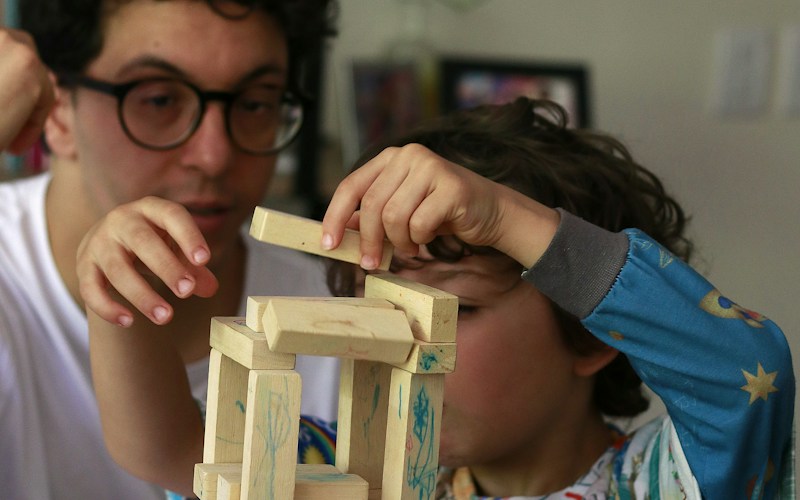
Play is a child's natural language of expression. Play therapy is a structured method using that language; its effectiveness rests on accurate assessment and family participation.
"My child goes to therapy but they just play." This is the sentence families beginning play therapy say most often, and beneath it lies a fair question: how does play become treatment?
The answer has to do with how children express themselves. Adults describe their feelings by talking; children do it by playing. Play is a child's natural language, and toys are their words.
This article explains what play therapy is, when it is used, how sessions work, the family's role, and what realistic expectations should be.
Key Points
- Play therapy is a structured psychotherapy method in which a child expresses and processes feelings and experiences through play.
- It is not "just playing"; every intervention by the therapist serves a particular purpose.
- It is generally used between the ages of three and eleven; talk-based therapies are limited at this age because abstract thinking has not developed.
- Parent sessions are an integral part of the process; a child attending alone is usually not enough.
- Change is gradual, and a temporary increase in symptoms may be seen at the start.
What Is Play Therapy?
Play therapy is a psychotherapy method that enables a child to express, make sense of and develop coping skills for emotional and behavioural difficulties through play.
In young children, abstract thinking and the ability to verbalise emotion have not yet developed. Few children can tell an adult "I feel worthless"; but the same child can create a small, powerless character who is always excluded. The therapist's work is to read that account and accompany the child in working with it.
Why Play?
Play provides a safe distance. Describing something that happened to you directly is hard, whereas describing the same event as having happened to a doll is possible. That distance lets the child move at a pace they can bear.
Play also allows repetition. A child constructs a difficult scene many times, gaining a little more control over it with each repetition.
Not "Just Playing"
The therapist is not a passive observer in the room. The toys used are chosen for a purpose, the therapist's comments and silences are deliberate, and the frame and limits of the session are consciously established.
What looks from outside like ordinary play is in fact structured work.
When Is It Used?
Play therapy is used across a wide range:
- Anxiety disorders: separation anxiety, school refusal, specific phobias
- Post-traumatic presentations: accident, bereavement, abuse, disaster
- Behavioural problems: tantrums, defiance, aggression
- Family transitions: divorce, moving house, a new sibling, parental illness
- Social difficulties: difficulty with peers, shyness, peer bullying
- Mood problems: childhood depression, withdrawal
- Adjustment difficulties: starting nursery, changing school
- Emotional strain accompanying developmental diagnoses: self-esteem and social skills work in ADHD or autism spectrum conditions
The Evidence Base
Meta-analyses of play therapy report meaningful improvement particularly in internalising symptoms (anxiety, withdrawal) and post-traumatic presentations. Effect sizes are larger where parents are included in the process.
That said, the level of evidence is more limited than for more heavily studied methods such as cognitive behavioural therapy, and the methodological quality of studies varies.
The practical implication: play therapy is a sound choice in younger children, but in certain presentations it should be planned alongside better-evidenced approaches rather than alone.
When Is It Not Sufficient?
Play therapy is not sufficient on its own in every presentation. In severe ADHD, the core features of autism spectrum disorder, severe depression or psychotic presentations, it must run alongside other approaches — behavioural interventions, special education, and medication where required.
Types of Play Therapy
Non-Directive (Child-Centred) Play Therapy
The child decides what to play. The therapist does not direct; they observe, reflect and name the child's feeling. The underlying assumption is that, given the right conditions, the child will find their own direction towards recovery.
It is often preferred where a trusting relationship needs to be built and in post-traumatic presentations.
Directive Play Therapy
The therapist plans activities towards a specific goal: coping with anger, social skills work, graded exposure to anxiety. It can be combined with cognitive behavioural principles.
It is used where the focus is on a particular symptom.
Parent-Child Interaction Therapy
Parent and child are in the playroom together and the therapist gives feedback in the moment. It is particularly effective for behavioural problems between the ages of two and seven. Here the subject of change is not only the child but the pattern of interaction between the pair.
Sand Tray and Creative Methods
The sand tray involves building a scene with miniature figures. Drawing, clay, storytelling and puppet work are also frequently used. These methods open a path especially with children who struggle to talk.
At What Age Is It Suitable?
Play therapy is typically used between the ages of three and eleven.
Ages 3-6: The period where the method is most naturally applied. Symbolic play peaks at this age; the child readily externalises feelings through toys.
Ages 7-11: Play remains effective, but structured activities, board games and creative methods take up more space. Talking also begins to enter at this age.
Over 11: As abstract thinking develops, talk-based methods come to the fore. Art, story and play elements can still be used as adjuncts in adolescent therapy.
Under 3: At this age intervention is directed less at the child than at the parent-infant relationship; infant psychiatry approaches are used.
How Do Sessions Work?
The First Appointment
The process begins not with the child but with the family. Developmental history, reason for referral, family structure, school situation and what has already been tried are addressed in detail.
At Assoc. Prof. Mehtap Eroglu's practice in Ankara, a psychiatric assessment of the child is also carried out at this stage; whether play therapy is the appropriate method and whether an accompanying condition exists are established.
Getting to Know and Building Trust
The first sessions are given over to the child becoming familiar with the room and the therapist. During this period the child may play superficially, test the therapist, or stay silent. This is normal and not a stage to be skipped.
The Working Period
Once trust is established, the content of play deepens. The child begins to bring difficult themes: fear, anger, jealousy, guilt, abandonment. The therapist accompanies these themes and supports the child in developing ways of coping.
Ending
Therapy is not stopped abruptly. Ending is discussed in advance and spread over several sessions. This also gives the child the experience of a healthy goodbye.
Session Arrangements
Sessions are generally weekly, on a fixed day and at a fixed time. This regularity gives therapy its predictability and safety; a frequently cancelled process does not progress. Breaks for holidays or illness should be discussed in advance so the child does not experience them as abandonment.
What Is in the Playroom?
The playroom is not a space filled with random toys. Materials are chosen so that the child can express different themes:
- Family and caregiving figures: dolls, a dolls' house, kitchen items — for enacting family relationships
- Materials allowing aggression: soft balls, sand, dough — for safely expressing anger
- Protective and powerful figures: superheroes, a doctor's set, soldiers — for working with feelings of powerlessness
- Creative materials: paint, clay, paper — for non-verbal expression
- Games with rules: board games — for turn-taking, tolerating losing, impulse control
Which materials a child gravitates to and which they avoid also carries diagnostic information.
The Family's Role
Dropping the child at therapy and waiting is not enough. The family's participation is the factor that directly determines effectiveness.
Parent Sessions
In the processes Assoc. Prof. Mehtap Eroglu conducts, sessions with parents are held at intervals. These review changes at home, work on parental approaches, and convey the themes emerging in therapy to the family.
How Is Confidentiality Maintained?
A question families often ask is whether what the child says in session will be shared. The detail of what happens in therapy is not shared; what is shared are general themes and what the family can do.
This boundary protects the child's trust. A child who believes everything they say will be relayed to their parents will not open up in therapy either. Situations involving risk to safety fall outside this rule and are reported to the family.
What to Do at Home
The therapist usually suggests things for the family to apply at home: special play time, exercises in naming feelings, changes in how limits are set. Doing these regularly is what makes the work within sessions durable.
How Should Therapy Be Explained to the Child?
A child knowing where they are going and why directly affects their engagement. Concealing it, or saying "we're not going to a doctor", creates mistrust when they enter the room.
The explanation should be age-appropriate, brief and non-blaming. For a young child: "We're going to see someone who talks with children by playing. There are toys there and you can play with whichever you like."
A school-age child can be told a little more openly: "Some things have been hard for you lately. We're going to see someone who helps children with that."
Frames to avoid:
- "We're going because you've been naughty" — turns therapy into a punishment
- "You'll behave in there" — places the child under performance pressure
- "You'll tell me what you talked about" — undermines the trusting relationship from the outset
A child not wanting to go is normal in the first sessions. Rather than forcing, continuing calmly but firmly is usually enough; resistance decreases after a few sessions.
Realistic Expectations
How Long Does It Take?
Duration varies with the reason for referral, how entrenched the picture is, and the family's participation. A recently emerged presentation linked to a specific event takes less time; long-standing pictures interwoven with family dynamics take longer.
The number of sessions cannot be stated definitively at the outset, but a range is given after the initial assessment and reviewed at intervals. In processes conducted in Ankara, that review both keeps the family's expectations realistic and allows early recognition of whether the method is working.
Symptoms May Increase Early On
In the first weeks of therapy the child may be more irritable, angrier or more demanding at home. This is usually not a negative sign; the child has begun expressing feelings they had suppressed.
This is the stage at which families most often stop. Discussing it in advance prevents the process being broken off. If the increase lasts more than a few weeks or markedly impairs the child's daily functioning, it must be shared with the therapist.
How Is Progress Measured?
Progress is measured not by observation within sessions but by change in the child's daily life: sleep patterns, willingness to go to school, frequency and duration of outbursts, peer relationships, physical complaints.
Simple recording of these by the family makes progress visible. In day-to-day observation the change is often too slow to notice; looking back at notes from two months earlier makes the difference concrete.
Common Practical Questions
Who Goes Into the Session?
It depends on the method and the child's age. In child-centred play therapy the child usually goes in alone. In parent-child interaction therapy the parent is in the room and part of the work.
With young children, having the parent in the room for the first sessions may be preferred to reduce separation anxiety; they withdraw gradually once trust is established.
Are Siblings Included?
Where sibling conflict is the main issue, sessions with siblings together can be planned. But where the subject of therapy is one child, a sibling constantly in the room narrows that child's own space.
Two Parents in Separated Families
Regardless of custody arrangements, including both parents wherever possible is recommended. A child encountering different rules in two homes weakens what is gained in therapy.
Where there is intense conflict between parents, sessions can be held separately; what matters is that both know the same plan.
Contact with School
With the family's consent, obtaining the teacher's observations is the most reliable way of monitoring the child's functioning at school. Contact with counselling services in schools in Ankara provides a source independent of the family's observation for measuring progress.
Expert Opinion
According to Assoc. Prof. Mehtap Eroglu, the most frequent misconception in play therapy referrals is seeing therapy as a procedure performed on the child. The family brings the child, drops them off, and expects to collect them "fixed".
Clinical experience from consultations in Ankara shows that outcomes are markedly better where the family participates. The child is in therapy for one hour a week and at home for all the rest; where the arrangement at home does not change, gains within sessions do not last.
Assoc. Prof. Mehtap Eroglu also emphasises the importance of a comprehensive psychiatric assessment before starting play therapy. Where attention deficit, a learning disorder or an anxiety disorder is missed, play therapy alone will not deliver the expected result and the family concludes the method does not work.
A further important point is the therapist's training. Play therapy requires field-specific training and supervision; not every practice involving play is play therapy.
Assessment and Appointment Process in Ankara
A considerable proportion of referrals for play therapy in Ankara occur after a family notices a behavioural problem or sign of anxiety. Some families arrive asking directly for "play therapy"; in that case whether the method is appropriate is assessed first.
In the process conducted by Assoc. Prof. Mehtap Eroglu in Ankara, a comprehensive child psychiatry assessment comes first: reason for referral, developmental history, school functioning and possible accompanying conditions are addressed. It is then decided whether play therapy is the appropriate method and whether it will run alone or alongside other interventions.
What families in Ankara find useful to bring to the first appointment: a school observation form or the teacher's view, any previous assessment reports, a list of current medications, and concrete examples from the past two months — what happened in which situation and how the family responded.
To determine the appropriate therapy method for your child in Ankara, you can review our psychotherapy service and request an appointment.
In Summary
Play therapy is a structured psychotherapy method that uses play, the child's natural language of expression. It is not "just playing"; every intervention by the therapist serves a purpose.
Two things determine its effectiveness: accurate initial assessment and the family's participation. Where an accompanying condition is missed, or the family stays outside the process, the method does not deliver the expected result.
Change is gradual, and a temporary increase in symptoms in the first weeks is normal. Progress is measured not within sessions but by change in the child's daily life.
For detailed information about child psychotherapy options and the session process in Ankara, see our child psychotherapy guide.
Frequently Asked Questions
Oyun terapisi gerçekten işe yarıyor mu, sadece oyun oynamak değil mi?
Sadece oynamak değildir. Kullanılan oyuncaklar belirli bir amaçla seçilir, terapistin yorumları ve sessizlikleri planlıdır, seansın çerçevesi bilinçli olarak kurulur. Meta-analizler özellikle kaygı, içe kapanma ve travma sonrası tablolarda anlamlı iyileşme bildirmektedir; ebeveynin sürece dâhil edildiği uygulamalarda etki daha yüksektir.
Oyun terapisi hangi yaşlarda uygulanır?
Tipik olarak 3-11 yaş aralığında kullanılır. 3-6 yaş yöntemin en doğal uygulandığı dönemdir; sembolik oyun bu yaşta zirvededir. 7-11 yaşta yapılandırılmış etkinlikler ve yaratıcı yöntemler daha fazla yer tutar. 11 yaş üstünde konuşma temelli yöntemler öne çıkar. 3 yaş altında müdahale çocuktan çok ebeveyn-bebek ilişkisine yöneliktir.
Kaç seans sürer?
Süre başvuru nedenine, tablonun süregenliğine ve ailenin katılımına göre değişir. Belirli bir olaya bağlı, yeni ortaya çıkmış bir tabloda süreç daha kısadır; uzun süredir devam eden ve aile dinamikleriyle iç içe geçmiş tablolarda daha uzun sürer. İlk değerlendirmeden sonra bir aralık verilir ve belirli aralıklarla gözden geçirilir.
Terapiye başladıktan sonra çocuğum daha huysuz oldu, normal mi?
İlk haftalarda çocuğun evde daha huysuz, öfkeli ya da talepkâr olması görülebilir ve bu genellikle olumsuz bir işaret değildir; çocuk bastırdığı duyguları ifade etmeye başlamıştır. Bu dönem ailelerin en çok bıraktığı aşamadır. Ancak artış birkaç haftayı aşıyor veya günlük işlevselliği belirgin biçimde bozuyorsa terapistle paylaşılmalıdır.
Seansta ne konuşulduğunu bana anlatırlar mı?
Terapide olup bitenlerin ayrıntısı paylaşılmaz; paylaşılan şey genel temalar ve ailenin ne yapabileceğidir. Bu sınır çocuğun güvenini korur: anlattığı her şeyin ailesine aktarılacağını düşünen bir çocuk terapide de açılmaz. Güvenlik riski içeren durumlar bu kuralın dışındadır ve aileye bildirilir.
Ben de seansa girmeli miyim?
Yöntem ve çocuğun yaşına göre değişir. Çocuk merkezli oyun terapisinde çocuk odaya genellikle yalnız girer. Ebeveyn-çocuk etkileşim terapisinde ise ebeveyn odadadır ve çalışmanın parçasıdır. Küçük çocuklarda ilk seanslarda ebeveynin bulunması ayrılık kaygısını azaltmak için tercih edilebilir.
Çocuğuma terapiye gittiğimizi nasıl anlatmalıyım?
Yaşa uygun, kısa ve suçlayıcı olmayan bir dille. Küçük çocuk için: 'Çocuklarla oyun oynayarak konuşan birine gideceğiz.' Okul çağındaki çocuğa: 'Son zamanlarda bazı şeyler seni zorluyor, bu konuda çocuklara yardım eden biriyle görüşeceğiz.' Kaçınılması gerekenler: 'Yaramazlık yaptığın için gidiyoruz', 'Orada uslu olacaksın', 'Ne konuştuğunuzu bana anlatacaksın'.
Çocuğum gitmek istemiyor, zorlamalı mıyım?
Gitmek istememek ilk seanslarda olağandır. Zorlamak yerine kararlılıkla ama sakin biçimde devam etmek genellikle yeterlidir; birkaç seans sonra direnç azalır. Direnç sürüyorsa nedeni terapistle ele alınmalıdır; bazen çocuğun kaygısı, bazen ailenin sürece dair tereddüdü çocuğa yansımaktadır.
Oyun terapisi tek başına yeterli mi?
Her tabloda değil. Şiddetli DEHB, otizm spektrum bozukluğunun çekirdek belirtileri, ağır depresyon ya da psikotik tablolarda başka yaklaşımlarla birlikte yürütülmesi gerekir: davranışsal müdahaleler, özel eğitim ve gerektiğinde ilaç tedavisi. Bu nedenle başlamadan önce kapsamlı bir psikiyatrik değerlendirme yapılmalıdır.
İlerlemeyi nasıl anlarım?
İlerleme seans içi gözlemle değil, çocuğun günlük yaşamındaki değişimle ölçülür: uyku düzeni, okula gitme isteği, öfke nöbetlerinin sıklığı ve süresi, arkadaş ilişkileri, bedensel yakınmalar. Bu göstergelerin basitçe kaydedilmesi ilerlemeyi görünür kılar; günlük gözlemde değişim çoğu zaman fark edilmeyecek kadar yavaştır.
References
- Landreth, G. L. (2012). Play Therapy: The Art of the Relationship (3rd ed.). Routledge.
- Bratton, S. C., Ray, D., Rhine, T., & Jones, L. (2005). The Efficacy of Play Therapy with Children: A Meta-Analytic Review of Treatment Outcomes. Professional Psychology: Research and Practice, 36(4), 376-390.
- Lin, Y. W., & Bratton, S. C. (2015). A Meta-Analytic Review of Child-Centered Play Therapy Approaches. Journal of Counseling & Development, 93(1), 45-58.
- Ray, D. C., Armstrong, S. A., Balkin, R. S., & Jayne, K. M. (2015). Child-Centered Play Therapy in the Schools: Review and Meta-Analysis. Psychology in the Schools, 52(2), 107-123.
- Axline, V. M. (1969). Play Therapy (Revised ed.). Ballantine Books.
- Eyberg, S. M., Nelson, M. M., & Boggs, S. R. (2008). Evidence-Based Psychosocial Treatments for Children and Adolescents with Disruptive Behavior. Journal of Clinical Child & Adolescent Psychology, 37(1), 215-237.
- Thomas, R., & Zimmer-Gembeck, M. J. (2007). Behavioral Outcomes of Parent-Child Interaction Therapy and Triple P: A Review and Meta-Analysis. Journal of Abnormal Child Psychology, 35(3), 475-495.
- Cohen, J. A., Mannarino, A. P., & Deblinger, E. (2017). Treating Trauma and Traumatic Grief in Children and Adolescents (2nd ed.). Guilford Press.
- Schaefer, C. E., & Drewes, A. A. (2013). The Therapeutic Powers of Play: 20 Core Agents of Change (2nd ed.). Wiley.

Doç. Dr. Mehtap Eroğlu
Associate Professor, Child and Adolescent Psychiatrist. Over 15 years of clinical experience. Ankara University Faculty of Medicine graduate.
View Full ProfileRelated Articles

Abdominal Pain and Headache in Children: Psychosomatic Symptoms

Selective Eating and ARFID in Children: My Child Won't Eat

Child Psychotherapy Ankara: Process, Methods and Comprehensive Guide for Families
Tic Disorders and Tourette Syndrome in Children: Comprehensive Parent Guide

Trichotillomania in Children: A Comprehensive Guide to Hair, Eyebrow and Eyelash Pulling