


The adult’s task is not to prove but to notice and report. Types of neglect and abuse, warning signs, what to do on disclosure and reporting routes in Türkiye.
Child abuse is a situation in which, once noticed, most adults do not know what to do. That uncertainty leads to well-meant mistakes: questioning the child repeatedly, promising to keep a secret, not acting until one is "sure".
Yet in this field the adult's task is not to prove anything. The task is to notice, respond correctly and report. Assessment and investigation are the work of the competent authorities.
This article sets out the forms neglect and abuse take, the warning signs, what families and teachers should do, and the reporting routes in Türkiye.
Key Points
- The adult's task is not to prove but to report; suspicion is enough.
- Questioning a child repeatedly causes harm and complicates the legal process.
- A promise that "I won't tell anyone" should not be made.
- In Türkiye the duty to report applies to everyone; it is separately defined for health and education staff.
- ALO 183, the Social Support Line, is open twenty-four hours a day, seven days a week.
- Where sexual abuse is suspected, the interview is conducted at a Child Monitoring Centre; the aim is to prevent the child having to recount events repeatedly.
Types of Neglect and Abuse
Physical Abuse
Deliberately causing bodily harm to a child. Even where it is said to be for the purpose of discipline, the outcome does not change.
Warning findings: injuries that are unexplained or inconsistent with the account given, bruises at different stages of healing, patterned lesions in the shape of a hand, fingers or a belt, injuries in unusual areas such as behind the ears and the inner arm, frequent and repeated accidents, and an account of the injury that changes each time.
Emotional Abuse
The most common type and the least recognised. Continual humiliation, rejection, intimidation, imposing responsibility inappropriate to age, making affection conditional, and using the child as an instrument in parental conflict all fall within this.
Because it leaves no physical trace it is missed; yet its long-term effects are as serious as those of the other types.
Sexual Abuse
Involving a child in a sexual act. It also covers forms that involve no physical contact: showing obscene material, watching the child, making recordings.
In most cases the perpetrator is someone the child knows and trusts. A protective approach based on "beware of strangers" is therefore not sufficient.
Neglect
The failure to meet a child's basic needs: nutrition, shelter, hygiene, health care, education, supervision and emotional attention.
Neglect is usually not a single event but an ongoing pattern. It should not be confused with poverty; the criterion is not whether means exist but whether existing means are directed to the child's needs.
Warning Signs
Behavioural Signs
- Sudden and marked change in behaviour
- Withdrawal, pulling away from friends
- Marked aggression or, conversely, excessive compliance
- Sexual knowledge or behaviour inappropriate to age
- Fear of a particular person or place, refusing to stay with that person
- Not wanting to go home, wanting to stay at school until late
- Sudden decline in school performance, absence
- Regression: bedwetting, thumb sucking, baby talk
- Sleep disturbance, nightmares
- Self-harm
- Running away, staying away from home
Physical Signs
- Injuries that are unexplained or inconsistent with the account given
- Difficulty walking or sitting
- Pain, bleeding or discharge in the genital area
- Recurrent urinary tract infections
- Inadequate nutrition, faltering growth
- Chronic hygiene problems, clothing unsuited to the season
- Neglected dental and skin health
- Untreated medical problems
No single finding establishes a diagnosis on its own. What is meaningful is several findings occurring together, beginning suddenly and persisting.
Presentation by Age
Preschool: Regression, a sudden increase in separation anxiety, sexual content in repetitive play, fear of a particular person.
Primary school: Decline in school performance, physical complaints, withdrawal from friends, sudden aggression, bedwetting starting again.
Adolescence: Self-harm, substance use, risk-taking behaviour, running away from home, dropping out of school, disrupted eating patterns, depressive symptoms.
What to Do When a Child Discloses
A child disclosing abuse is a rare and difficult moment. The adult's response in that moment directly affects both the child's recovery and the integrity of the legal process.
What to Do
Stay calm. A reaction of shock, anger or crying silences the child; the child often believes they have upset you by telling.
Believe them and say so. "Thank you for telling me. I believe you. This is not your fault." These three sentences are enough.
Listen, do not question. Listen to as much as the child tells you. Do not ask for detail or try to fill in gaps.
Note their own words. Where possible, write down the expressions the child used without later replacing them with your own.
Report. Make a report to the competent authority as soon as you become aware.
Ensure safety. Ending the child's contact with the suspected person is the first measure.
What Not to Do
Do not question repeatedly. Each repetition re-traumatises the child and undermines the consistency of the account; this can work against the child in the legal process.
Do not ask leading questions. Questions of the form "did he do this to you?" change the child's account and reduce its legal value. Open-ended phrases such as "what happened then?" are sufficient.
Do not promise secrecy. Saying "I won't tell anyone" is a promise that cannot be kept and further damages trust. Instead: "To keep you safe I'll need to talk to some people, but I'll tell you what I'm going to do."
Do not confront the suspected person. This both endangers the child and can lead to the loss of evidence.
Do not blame the child. The question "why didn't you say something sooner?" is perceived as blame.
Do not look for evidence. Examining the child's body or taking photographs is not the adult's role.
How Is a Report Made in Türkiye?
In Türkiye reporting child abuse is not merely an option but a legal obligation. This obligation applies to everyone; it is separately defined for public officials and health workers.
Definite proof is not required to report; reasonable suspicion is enough. Assessment is the work of the competent authorities.
Routes for reporting:
- ALO 183 Social Support Line — free, twenty-four hours a day, seven days a week
- 155 Police / 156 Gendarmerie — in emergencies and situations of danger
- The Chief Public Prosecutor's Office — a direct criminal complaint
- The Provincial Directorate of Family and Social Services
- Hospitals' child protection units
- Through the guidance service and school administration in schools
Where a child has an urgent medical need or there is a threat to life, the emergency department should be attended directly.
Child Monitoring Centres
Where sexual abuse is suspected, the interview is conducted at a Child Monitoring Centre. The purpose of these centres is to prevent the child recounting the event repeatedly to different people.
The forensic interview is carried out there by trained personnel, on a single occasion and with a recording made. The medical examination is conducted at the same centre. This structure both reduces secondary traumatisation of the child and raises the quality of the legal process.
It is therefore important that families and teachers do not attempt detailed interviews themselves.
What Happens After a Report?
The main reason families hesitate to report is not knowing what will follow. The process generally proceeds through these steps.
After a report is received, an initial assessment is carried out by social workers. Where the child's safety is at risk, a protective measure may be ordered; this does not always mean the child is separated from the family. Measures range widely, from support services to placement, and the aim is to protect the child within their family wherever possible.
On the legal side, where sexual abuse is suspected, the interview is conducted at a Child Monitoring Centre. In other types of abuse the process proceeds through the prosecutor's office and law enforcement.
The identity of the person reporting is protected, and a report made in good faith creates no liability even if it is not subsequently confirmed. This is one of the most important points in removing hesitation about reporting.
How the Institutions Work Together
Child protection is not the work of a single institution. Schools, health services, social services and judicial authorities work together.
The practical implication for families is this: reporting to one place is enough. Referral between institutions is handled within the system; neither the family nor the teacher needs to apply separately to every institution.
The Role of School and Teachers
School is the setting in which child abuse is most often noticed. The teacher is the only adult who sees the child for a substantial part of the day and among their peers; they are therefore often the first to notice a change in behaviour.
The teacher's task is not to make a diagnosis. The task is to notice the change, record the observation and pass it to the school administration and guidance service.
The steps to follow at school are: putting the observation in writing with the date and time, noting the child's own words without altering them, reporting to the school administration and guidance service, and the institution making the legal report.
What not to do: raising the subject in class or in front of other children, questioning the child in detail, or calling the family directly to confront them. Where the person suspected is a family member, informing the family can endanger the child.
A teacher's duty to report is independent of the family's reaction and is not conditional on the school administration's approval.
Risk Factors and Common Misconceptions
Knowing the risk factors helps with early recognition; but no factor is determinative on its own.
Factors on the child's side: disability, chronic illness, developmental delay, a history of premature birth, difficulty communicating. Risk is high in children who find it hard to express themselves.
Factors on the family's side: substance use in the family, untreated mental illness, domestic violence, social isolation, a parent's own history of abuse in childhood, very young parenthood.
Common misconceptions:
- *"Abuse is committed by strangers."* In most cases the perpetrator is someone the child knows and trusts.
- *"Children lie about these things."* Children fabricating abuse is rare; what is more common is retracting after disclosing.
- *"No marks means no abuse."* In a substantial proportion of sexual abuse cases no physical findings are identified.
- *"It only happens in certain families."* It occurs at every socioeconomic and educational level.
- *"The child will forget, let's not talk about it."* Not talking does not reduce the effect; it distances the child from support.
Psychological Effects and Treatment
Short- and Long-Term Effects
The psychological effects of abuse and neglect are not confined to a single condition. Post-traumatic stress disorder, depression, anxiety disorders, self-harm, eating disorders, substance use and attachment difficulties may occur.
Factors determining the severity of the effect include the duration of the abuse, the perpetrator's closeness to the child, the response received on disclosure, and the presence of a supportive adult. The last of these is the one that can be changed; the presence of a protective adult is therefore the strongest determinant of recovery.
Treatment
Trauma-focused cognitive behavioural therapy has the strongest evidence in this field. Its core components are emotion-regulation skills, gradual narrative construction, cognitive processing and the involvement of a protective parent.
For detail, see our article on post-traumatic stress disorder.
Medication is not the first step; it is considered where there is accompanying marked depression, severe sleep disturbance, or anxiety at a level that prevents participation in therapy.
A Protective Approach
Prevention rests on knowledge, not on frightening children.
Teach bodily boundaries. Using the correct names for body parts from a young age enables a child to describe things clearly when needed.
Establish the distinction between a secret and a surprise. A surprise is revealed in the end and brings pleasure; a secret is kept and causes discomfort. Teach that nothing described as "let's keep this between us" can be a secret.
Recognise their right to say no. A child being able to refuse to hug a relative when they do not want to is part of learning bodily boundaries.
Build a list of safe adults. Identify together at least three adults the child can go to when struggling.
Discuss digital safety. People met online, sharing images and the risk of blackmail should be addressed in an age-appropriate way.
Keep the conversation going. What is needed is not a single conversation but a framework renewed as the child grows.
Expert Opinion
According to Assoc. Prof. Mehtap Eroglu, the mistake adults make most often is questioning the child in order to be sure. The effort is well meant but causes harm in two ways: the child is re-traumatised with each account, and small differences between accounts can be interpreted against them in the legal process. The adult's task is not to prove but to notice and report.
The second common mistake is the approach of "let's resolve it within the family". This stance usually leaves the child unprotected and creates the conditions for abuse to continue.
Assoc. Prof. Mehtap Eroglu also emphasises that the response given at the moment of disclosure determines the long-term outcome. Recovery is markedly better in a child who is believed and not blamed. The sentences "I believe you" and "this is not your fault" have a clinically measurable protective effect.
Assoc. Prof. Mehtap Eroglu draws attention to a further matter: a child retracting after disclosing is a common occurrence. Retraction usually does not mean the account was untrue; it arises from pressure within the family, guilt, or fear of the consequences the event has caused. Knowing this prevents the process being closed prematurely.
Assoc. Prof. Mehtap Eroglu notes that explaining the post-reporting process to families in advance markedly reduces their anxiety. Families' hesitation is usually the fear of "will they take my child away"; yet the great majority of protective measures are directed at supporting the child within their family.
The third point is the invisibility of emotional abuse. Because it leaves no physical trace it is underestimated by both families and institutions; yet the long-term effects of continual humiliation and rejection are as serious as those of the other types.
Assessment and Appointment Process in Ankara
Referrals for suspected abuse and neglect in Ankara mostly arrive by three routes: the school guidance service noticing something, a doctor's suspicion during an examination, and a direct approach by the family. In all three cases the legal reporting process runs independently of the clinical assessment.
The purpose of the assessment conducted by Assoc. Prof. Mehtap Eroglu in Ankara is not to replace the forensic interview. Clinical assessment is directed at establishing the child's mental state, identifying accompanying conditions and constructing a treatment plan. The forensic interview is conducted at a Child Monitoring Centre.
A subject families in Ankara often raise is whether the child will be made to talk about the event. In the clinical process the child is not pressed to disclose; safety and emotion regulation are worked on first, and narrative work is done gradually and when the child is ready. In the clinical process in Ankara this is planned according to the child's readiness.
A situation frequently encountered in these referrals in Ankara is families confusing the legal process with the clinical one. The two run separately: the legal process is directed at investigating the event, the clinical process at the child's mental state. Clinical support does not wait for the legal process to conclude.
Parallel work with the protective parent in Ankara is an integral part of the process. The parent's ability to regulate their own response directly affects the child's recovery.
If you would like to arrange an assessment for your child in Ankara, you can find information about the child psychiatry service and request an appointment.
In Summary
In child abuse the adult's task is not to prove but to notice and report. Suspicion is enough for a report; assessment is the work of the competent authorities.
When a child discloses, staying calm, saying that you believe them and not blaming them are the three most important steps. Questioning repeatedly, asking leading questions and promising secrecy cause harm.
In Türkiye the ALO 183 Social Support Line is open twenty-four hours a day, seven days a week. Where sexual abuse is suspected, the forensic interview is conducted at a Child Monitoring Centre, on a single occasion and by trained personnel.
The strongest determinant of recovery is the presence of a protective adult alongside the child.
Frequently Asked Questions
Emin değilim, yine de bildirmeli miyim?
Evet. Bildirim için kesin kanıt gerekmez; makul şüphe yeterlidir. Değerlendirme ve soruşturma yetkili kurumların işidir. İyi niyetle yapılan bildirim, sonradan doğrulanmasa bile sorumluluk doğurmaz ve bildirimi yapan kişinin kimliği korunur.
Nereye bildirim yapabilirim?
ALO 183 Sosyal Destek Hattı ücretsizdir ve yedi gün yirmi dört saat açıktır. Acil ve tehlike durumunda 155 Polis ya da 156 Jandarma aranır. Ayrıca Cumhuriyet Başsavcılığına doğrudan suç duyurusunda bulunulabilir, Aile ve Sosyal Hizmetler İl Müdürlüğüne veya hastanelerin çocuk koruma birimlerine başvurulabilir.
Çocuk bana anlattı, ne yapmalıyım?
Sakin kalın, inandığınızı söyleyin ve suçlamayın. Üç cümle yeterlidir: 'Bana anlattığın için teşekkür ederim. Sana inanıyorum. Bu senin suçun değil.' Ardından çocuğun kendi sözcüklerini not edin, şüpheli kişiyle temasını kesin ve bildirim yapın.
Ayrıntıları sormalı mıyım?
Hayır. Defalarca sorgulamak çocuğu yeniden örseler ve anlatımın tutarlılığını bozarak adli süreçte aleyhe sonuç doğurabilir. 'Sana şunu mu yaptı?' gibi yönlendirici sorular anlatımın adli değerini düşürür. Çocuğun kendi anlattığı kadarını dinlemek yeterlidir.
Sır tutacağıma söz verebilir miyim?
Hayır. Bu tutulamayacak bir sözdür ve sonradan güveni daha da zedeler. Bunun yerine dürüst olun: 'Seni korumak için bazı kişilerle konuşmam gerekecek, ama ne yapacağımı sana söyleyeceğim.' Çocuğa süreç hakkında bilgi vermek güveni korur.
Çocuk İzlem Merkezi nedir?
Cinsel istismar şüphesinde adli görüşmenin yürütüldüğü merkezlerdir. Amaç çocuğun olayı defalarca farklı kişilere anlatmasını önlemektir. Görüşme eğitimli kişilerce, tek seferde ve kayıt altına alınarak yapılır; tıbbi muayene de aynı merkezde gerçekleştirilir.
Bildirim sonrası çocuğumu alırlar mı?
Koruyucu tedbirlerin büyük bölümü çocuğu ailesi içinde desteklemeye yöneliktir. Bildirim sonrası sosyal hizmet uzmanları bir ön değerlendirme yapar. Tedbirler destek hizmetlerinden yerleştirmeye kadar geniş bir aralıktadır ve amaç mümkün olduğunda çocuğu ailesi içinde korumaktır.
Çocuklar bu konuda yalan söyler mi?
Çocukların istismarı uydurması ender görülür. Daha sık görülen durum, anlattıktan sonra sözünü geri almasıdır. Geri alma çoğu zaman anlatımın yanlış olduğu anlamına gelmez; aile içi baskı, suçluluk ya da olayın yarattığı sonuçlardan korkma nedeniyle ortaya çıkar.
Fiziksel bulgu yoksa istismar yok mudur?
Hayır. Cinsel istismar olgularının önemli bölümünde fiziksel bulgu saptanmaz. Bulgu olmaması istismarın olmadığı anlamına gelmez. Benzer biçimde duygusal istismar hiçbir fiziksel iz bırakmaz; en sık görülen ancak en az fark edilen türdür.
Çocuğumu nasıl korurum?
Önleme korkutmaya değil bilgiye dayanır. Küçük yaştan itibaren vücut bölümlerinin doğru adlarını kullanın, sır ile sürpriz ayrımını öğretin, çocuğun istemediğinde sarılmayı reddetme hakkını tanıyın, zorlandığında gidebileceği en az üç güvenli erişkin belirleyin ve dijital güvenliği yaşa uygun biçimde konuşun.
References
- World Health Organization (2022). Child Maltreatment: Fact Sheet. Geneva: WHO.
- Gilbert, R., Widom, C. S., Browne, K., Fergusson, D., Webb, E., & Janson, S. (2009). Burden and Consequences of Child Maltreatment in High-Income Countries. The Lancet, 373(9657), 68-81.
- American Academy of Pediatrics, Committee on Child Abuse and Neglect (2015). The Evaluation of Children in the Primary Care Setting When Sexual Abuse Is Suspected. Pediatrics, 136(6), e1778-e1793.
- Lamb, M. E., Hershkowitz, I., Orbach, Y., & Esplin, P. W. (2008). Tell Me What Happened: Structured Investigative Interviews of Child Victims and Witnesses. Wiley.
- Cohen, J. A., Mannarino, A. P., & Deblinger, E. (2017). Treating Trauma and Traumatic Grief in Children and Adolescents (2nd ed.). Guilford Press.
- Heger, A., Ticson, L., Velasquez, O., & Bernier, R. (2002). Children Referred for Possible Sexual Abuse: Medical Findings in 2384 Children. Child Abuse & Neglect, 26(6-7), 645-659.
- Felitti, V. J., Anda, R. F., Nordenberg, D., et al. (1998). Relationship of Childhood Abuse and Household Dysfunction to Many of the Leading Causes of Death in Adults: The ACE Study. American Journal of Preventive Medicine, 14(4), 245-258.
- London, K., Bruck, M., Ceci, S. J., & Shuman, D. W. (2005). Disclosure of Child Sexual Abuse: What Does the Research Tell Us About the Ways That Children Tell? Psychology, Public Policy, and Law, 11(1), 194-226.
- Council of Europe (2007). Convention on the Protection of Children against Sexual Exploitation and Sexual Abuse (Lanzarote Convention).
This article is for general information and does not replace an individual medical evaluation. If you are concerned about your child, please consult a child and adolescent psychiatrist. In an emergency call 112.
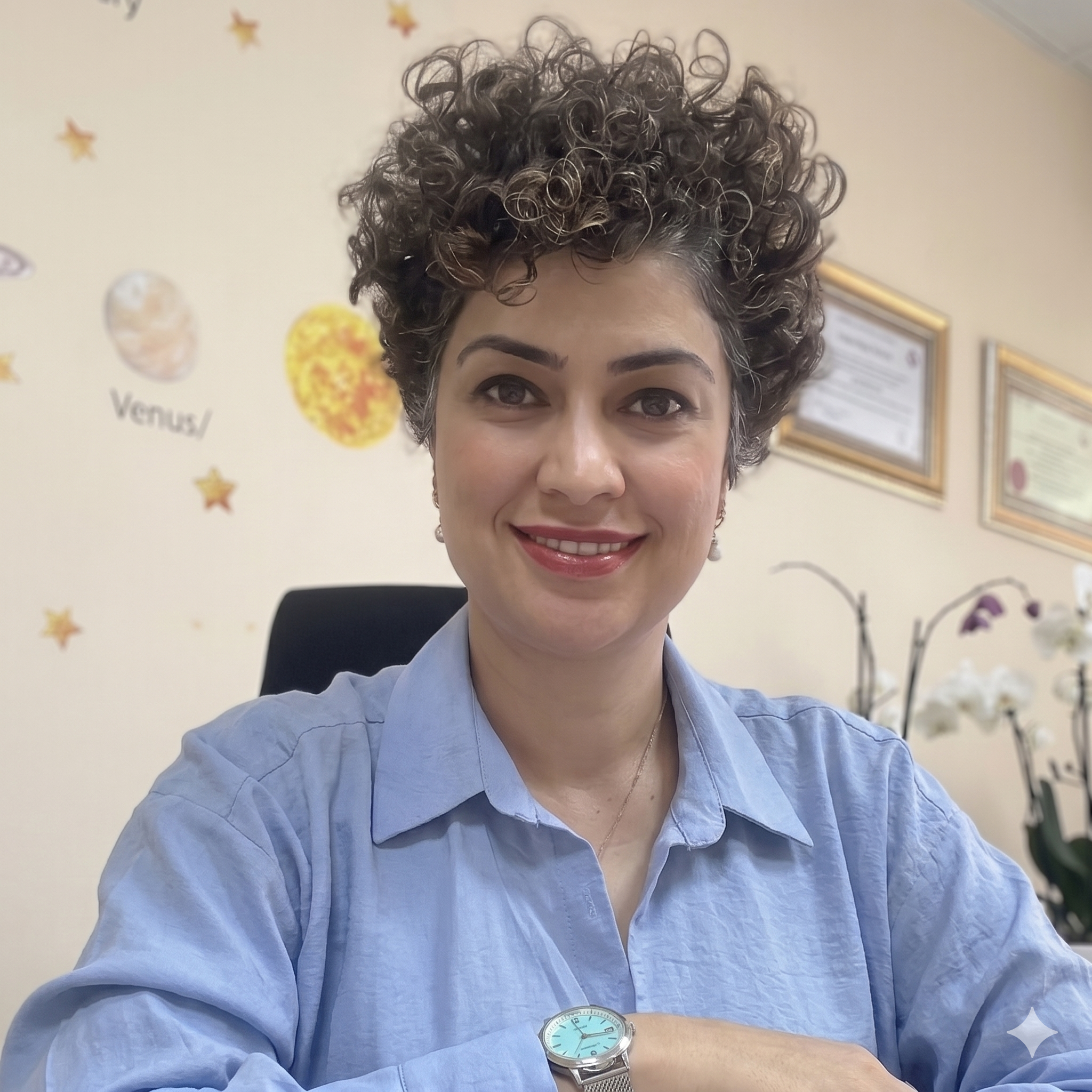
Doç. Dr. Mehtap Eroğlu
Associate Professor, Child and Adolescent Psychiatrist. Completed her specialty training in child and adolescent psychiatry at Ankara University. Over 15 years of clinical experience.
View Full ProfileRelated service: Child psychiatry assessment in Ankara
Related Articles

The Difference Between a Child Psychiatrist and a Psychologist

Child Mental Health After Earthquakes and Disasters

Abdominal Pain and Headache in Children: Psychosomatic Symptoms
What Is Play Therapy for Children? A Comprehensive Parent Guide

Selective Eating and ARFID in Children: My Child Won't Eat